
🔤 इंग्रजी व्याकरण व आकलन • TOPIC PRACTICE HUB

Verbs: Transitive, Intransitive & Non-Finite Forms

English Grammar & Vocabulary

'Verbs: Transitive, Intransitive & Non-Finite Forms' या घटकावरील आयोगाचे मागील वर्षांचे प्रश्न (PYQs) व अद्ययावत संभाव्य प्रश्न सविस्तर मराठी व इंग्रजी स्पष्टीकरणासह सोडवा.

अधिकृत सराव प्रश्न 100 MCQs
विषय विभाग इंग्रजी व्याकरण
पृष्ठ क्रमांक 1 / 5
🎯 बाजार समिती (APMC) 🎯 जिल्हा मध्यवर्ती बँक 🎯 अहमदनगर DCCB 🎯 छ. संभाजीनगर DCCB 🎯 नागपूर DCCB

📝 घटकनिहाय सोडवलेले प्रश्न (Canonical Solved MCQs)

प्रश्न 1 ते 20 (एकूण 100)
प्रश्न #1 📅 Combine Group B Mains 2025
+1.0 / -0.25
(i) Madhu likes Mangoes.
(ii) The old man sat in a corner.
The verbs underlined in the sentence (i) and (ii) above are ______ verbs respectively.
(a) transitive, transitive (b) transitive, intransitive
(c) intransitive, intransitive (d) intransitive, transitive
Answer options:
EN (i) Madhu likes Mangoes.
(ii) The old man sat in a corner.
The verbs underlined in the sentence (i) and (ii) above are ______ verbs respectively.
(a) transitive, transitive (b) transitive, intransitive
(c) intransitive, intransitive (d) intransitive, transitive
Answer options:
1: (d) Only
2: (b) Only
3: (a) Only
4: (c) Only
  • (A) (d) Only
  • (B) (b) Only
  • (C) (a) Only
  • (D) (c) Only
अचूक उत्तर: पर्याय (B) (b) Only

अचूक उत्तर: पर्याय (२) (b) Only स्पष्टीकरण: Transitive vs Intransitive Verbs (सकर्मक वि. अकर्मक क्रियापदे): तपशीलवार विश्लेषण: १. वाक्य (i): *"Madhu likes Mangoes."* - 'Likes' हे क्रियापद आहे. - मधुला काय आवडते? -> 'Mangoes' (आंबे - हे क्रियापदाचे...
प्रश्न #2 📅 Combine Group B Mains 2025
+1.0 / -0.25
'The noun, pronoun or noun phrase which follows a/an ______verb is called its object.'
EN 'The noun, pronoun or noun phrase which follows a/an ______verb is called its object.'
1: Intransitive
2: Transitive
3: Strong
4: Weak
  • (A) Intransitive
  • (B) Transitive
  • (C) Strong
  • (D) Weak
अचूक उत्तर: पर्याय (B) Transitive

अचूक उत्तर: पर्याय (२) Transitive स्पष्टीकरण: Grammatical Definition of a Transitive Verb (सकर्मक क्रियापदाची व्याख्या): व्याकरणाचा नियम: १. व्याख्या: - ज्या क्रियापदाच्या नंतर येणारे नाम, सर्वनाम किंवा नामसमूह (noun, pronoun or noun phrase) हे त्या...

प्रश्न #3 📅 Group C Mains 2025
+1.0 / -0.25
Choose an option/options containing the verb/s with their correct type/s:
a. Sit-Sat = Weak Verb
b. Feel-Felt = Weak Verb
c. Flee-Fleet = Strong Verb
d. Post-Posted = Weak Verb
EN Choose an option/options containing the verb/s with their correct type/s:
a. Sit-Sat = Weak Verb
b. Feel-Felt = Weak Verb
c. Flee-Fleet = Strong Verb
d. Post-Posted = Weak Verb
1: d only
2: both b and d
3: a only
4: both b and c
  • (A) d only
  • (B) both b and d
  • (C) a only
  • (D) both b and c
अचूक उत्तर: पर्याय (B) both b and d

अचूक उत्तर: पर्याय (२) both b and d स्पष्टीकरण: Strong Verbs vs Weak Verbs (अनियमित वि. नियमित क्रियापदे): व्याकरणाचा नियम (Wren & Martin): १. Weak Verbs (नियमित क्रियापदे): - ज्या क्रियापदांचे भूतकाळी रूप (Past Tense) मूळ धातूला '-d', '-ed' किंवा...

प्रश्न #4 📅 Rajyaseva Mains 2024
+1.0 / -0.25
Identify the kind of verb in the given sentence. "He got her a splendid present".
EN Identify the kind of verb in the given sentence. "He got her a splendid present".
1: Transitive verb
2: Intransitive verb
3: Ditransitive verb
4: Complex transitive verb
  • (A) Transitive verb
  • (B) Intransitive verb
  • (C) Ditransitive verb
  • (D) Complex transitive verb
अचूक उत्तर: पर्याय (C) Ditransitive verb

अचूक उत्तर: पर्याय (३) Ditransitive verb स्पष्टीकरण: Ditransitive Verbs (द्विकर्मक क्रियापदे): व्याकरणाचा नियम: १. Ditransitive Verb (द्विकर्मक क्रियापद) म्हणजे काय? - जे सकर्मक क्रियापद वाक्यामध्ये दोन कर्मांना (Two Objects) सोबत घेते, त्याला...

प्रश्न #5 📅 Combine Group B Mains 2023
+1.0 / -0.25
i. Please, boil the water.
ii. The water is boiling.
The underlined verbs in the sentences above belong to the types of verb called ________ and ________ respectively.
EN i. Please, boil the water.
ii. The water is boiling.
The underlined verbs in the sentences above belong to the types of verb called ________ and ________ respectively.
1: Transitive, Transitive
2: Intransitive, Transitive
3: Transitive, Intransitive
4: Intransitive, Intransitive
  • (A) Transitive, Transitive
  • (B) Intransitive, Transitive
  • (C) Transitive, Intransitive
  • (D) Intransitive, Intransitive
अचूक उत्तर: पर्याय (C) Transitive, Intransitive

अचूक उत्तर: पर्याय (३) Transitive, Intransitive स्पष्टीकरण: Ergative Verbs: Used Both Transitively and Intransitively: व्याकरणाचा नियम: १. वाक्य i: *"Please, boil the water."* - 'Boil' (उकळणे/उकळवणे) या क्रियापदानंतर 'the water' हे काय उकळायचे याचे...

प्रश्न #6 📅 Rajyaseva Mains 2023
+1.0 / -0.25
Identify the kind of verb in the given sentence.
'We can lift this load'.
EN Identify the kind of verb in the given sentence.
'We can lift this load'.
1: transitive verb, modal verb
2: intransitive verb, modal verb
3: modal verb, transitive verb
4: transitive verb, transitive verb
  • (A) transitive verb, modal verb
  • (B) intransitive verb, modal verb
  • (C) modal verb, transitive verb
  • (D) transitive verb, transitive verb
अचूक उत्तर: पर्याय (C) modal verb, transitive verb

अचूक उत्तर: पर्याय (३) modal verb, transitive verb स्पष्टीकरण: Classification of Verb Elements in a Verb Phrase: तपशीलवार विश्लेषण: १. दिलेले वाक्य: *"We can lift this load."* २. या वाक्यातील क्रियापद समूह (Verb Phrase): 'can lift' - can: हे भाववाचक...

प्रश्न #7 📅 Rajyaseva Mains 2021
+1.0 / -0.25
(a) He resembles his brother.
(b) I am tired with this work.
(c) He ordered a new car.
(d) He will combat your views.
Identify the grammatically correct sentence/s.
EN (a) He resembles his brother.
(b) I am tired with this work.
(c) He ordered a new car.
(d) He will combat your views.
Identify the grammatically correct sentence/s.
1: Only (a) and (b)
2: Only (c) and (d)
3: Only (b), (c) and (d)
4: Only (a), (c) and (d)
  • (A) Only (a) and (b)
  • (B) Only (c) and (d)
  • (C) Only (b), (c) and (d)
  • (D) Only (a), (c) and (d)
अचूक उत्तर: पर्याय (D) Only (a), (c) and (d)

अचूक उत्तर: पर्याय (४) Only (a), (c) and (d) स्पष्टीकरण: Transitive Verbs without Prepositions & Correct Collocations: तपशीलवार विश्लेषण: १. विधान (a): *"He resembles his brother."* - बरोबर: 'Resemble' (सारखा दिसणे) हे सकर्मक क्रियापद असून यानंतर...

प्रश्न #8 📅 Rajyaseva Mains 2020
+1.0 / -0.25
The committee ________ considered your request.
The verb which agrees with the subject - 'The committee' in notional concord is :
(a) are (b) is
(c) has (d) have
Answer options :
EN The committee ________ considered your request.
The verb which agrees with the subject - 'The committee' in notional concord is :
(a) are (b) is
(c) has (d) have
Answer options :
1: (c) only
2: (b) only
3: (a) only
4: (d) only
  • (A) (c) only
  • (B) (b) only
  • (C) (a) only
  • (D) (d) only
अचूक उत्तर: पर्याय (D) (d) only

प्रश्न #9 📅 Rajyaseva Mains 2020
+1.0 / -0.25
Choose the sentence/s incorrect.
(a) I have not played cricket since I have left college.
(b) I have not played cricket since I left college.
Answer options :
EN Choose the sentence/s incorrect.
(a) I have not played cricket since I have left college.
(b) I have not played cricket since I left college.
Answer options :
1: (b) only
2: (a) and (b)
3: (a) only
4: None of the above
  • (A) (b) only
  • (B) (a) and (b)
  • (C) (a) only
  • (D) None of the above
अचूक उत्तर: पर्याय (C) (a) only

अचूक उत्तर: पर्याय (३) (a) only स्पष्टीकरण: Tenses with Time Conjunction 'Since': व्याकरणाचा नियम: १. 'Since' चा नियम: - जेव्हा 'Since' हा शब्द उभयान्वयी अव्यय (Conjunction of Time) म्हणून येतो: - Main clause: Present Perfect Tense (*have/has + V3*)...

प्रश्न #10 📅 Rajyaseva Mains 2020
+1.0 / -0.25
He asked me if I knew who that girl was.
Which one of the following is the correct Yes-No question corresponding to the sentence above ?
(a) Do you know who is that girl ?
(b) Did you know who is that girl ?
(c) Did you know who that girl was?
(d) Did you ask me who that girl was?
Answer options :
EN He asked me if I knew who that girl was.
Which one of the following is the correct Yes-No question corresponding to the sentence above ?
(a) Do you know who is that girl ?
(b) Did you know who is that girl ?
(c) Did you know who that girl was?
(d) Did you ask me who that girl was?
Answer options :
1: (d) only
2: (b) only
3: (c) only
4: (a) only
  • (A) (d) only
  • (B) (b) only
  • (C) (c) only
  • (D) (a) only
अचूक उत्तर: पर्याय (C) (c) only

अचूक उत्तर: पर्याय (३) (c) only स्पष्टीकरण: Indirect to Direct Speech: Yes-No Question Conversion: तपशीलवार विश्लेषण: १. दिलेले Indirect वाक्य: *"He asked me if I knew who that girl was."* - येथे 'if' ने जोडलेले उपवाक्य हे मूळच्या Yes-No प्रश्नाचे...

प्रश्न #11 📅 Combine Group B Mains 2020
+1.0 / -0.25
Identify the correct sentence/s.
a. The steak tastes badly.
b.The team played well.
c. Frank is happier than any man.
Answer Options :
EN Identify the correct sentence/s.
a. The steak tastes badly.
b.The team played well.
c. Frank is happier than any man.
Answer Options :
1: Only a
2: Only b
3: Only a and b
4: Only b and c
  • (A) Only a
  • (B) Only b
  • (C) Only a and b
  • (D) Only b and c
अचूक उत्तर: पर्याय (B) Only b

अचूक उत्तर: पर्याय (२) Only b स्पष्टीकरण: Linking Verbs vs Action Verbs & Comparative Degree Rules: तपशीलवार विश्लेषण: १. विधान a ची चूक: *"The steak tastes badly."* - 'Taste' हे संवेदनदर्शक क्रियापद (Verb of Sensation / Linking Verb) आहे. - Linking...

प्रश्न #12 📅 Rajyaseva Mains 2019
+1.0 / -0.25
Identify transitive and intransitive verbs in the given sentences :
(a) The rain revived the wilting shrubs.
(b) The dog chased the man.
(c) The choir sang badly that morning.
Answer options :
EN Identify transitive and intransitive verbs in the given sentences :
(a) The rain revived the wilting shrubs.
(b) The dog chased the man.
(c) The choir sang badly that morning.
Answer options :
1: Intransitive, Intransitive, Transitive
2: Transitive, Intransitive, Transitive
3: Intransitive, Transitive, Intransitive
4: Transitive, Transitive, Intransitive
  • (A) Intransitive, Intransitive, Transitive
  • (B) Transitive, Intransitive, Transitive
  • (C) Intransitive, Transitive, Intransitive
  • (D) Transitive, Transitive, Intransitive
अचूक उत्तर: पर्याय (D) Transitive, Transitive, Intransitive

अचूक उत्तर: पर्याय (४) Transitive, Transitive, Intransitive स्पष्टीकरण: Transitive vs Intransitive Verbs (सकर्मक व अकर्मक क्रियापदे): तपशीलवार विश्लेषण: १. वाक्य (a): *"The rain revived the wilting shrubs."* - क्रियापद: revived (पुनरुज्जीवित केले)...

प्रश्न #13 📅 Forest Service Pre 2019
+1.0 / -0.25
(a) Not all women are good at cooking.
(b) Blaming others for our own mistakes is a bad habit.
(c) We can' t help laughing when the jester is at his best.
(d) Stopping by woods on a darkened evening is dangerous.
The underlined words are :
EN (a) Not all women are good at cooking.
(b) Blaming others for our own mistakes is a bad habit.
(c) We can' t help laughing when the jester is at his best.
(d) Stopping by woods on a darkened evening is dangerous.
The underlined words are :
1: adverbs
2: present participles
3: gerunds
4: subjects
  • (A) adverbs
  • (B) present participles
  • (C) gerunds
  • (D) subjects
अचूक उत्तर: पर्याय (C) gerunds

अचूक उत्तर: पर्याय (३) gerunds स्पष्टीकरण: Non-Finite Verbs: Identification of Gerunds (धातुसाधित नामे / Gerunds): व्याकरणाचा नियम: १. Gerund म्हणजे काय? - जेव्हा क्रियापदाचे '-ing' रूप वाक्यात नाम (Noun) म्हणून कार्य करते, तेव्हा त्याला Gerund...

प्रश्न #14 📅 Forest Service Pre 2019
+1.0 / -0.25
Select the correct meaning of the underlined modal verb in the following sentence : I
I am tired, now you can drive car.
EN Select the correct meaning of the underlined modal verb in the following sentence : I
I am tired, now you can drive car.
1: possibility
2: ability
3: permission
4: obligation
  • (A) possibility
  • (B) ability
  • (C) permission
  • (D) obligation
अचूक उत्तर: पर्याय (C) permission

अचूक उत्तर: पर्याय (३) permission स्पष्टीकरण: Meaning and Functions of Modal Auxiliary 'Can': तपशीलवार विश्लेषण: १. वाक्य: *"I am tired, now you can drive car."* (मी थकलो आहे, आता तू गाडी चालवू शकतोस). २. संदर्भ: - बोलणारा सांगतो की तो थकल्यामुळे...

प्रश्न #15 📅 Combine Group B Mains 2018
+1.0 / -0.25
To err is human.
The underlined 'to-infinitive' in the sentence above functions as
EN To err is human.
The underlined 'to-infinitive' in the sentence above functions as
1: the object of a verb
2: the subject of a sentence
3: the subject of a verb
4: the preparatory subject
  • (A) the object of a verb
  • (B) the subject of a sentence
  • (C) the subject of a verb
  • (D) the preparatory subject
अचूक उत्तर: पर्याय (B) the subject of a sentence

अचूक उत्तर: पर्याय (२) the subject of a sentence स्पष्टीकरण: Non-Finite Verbs: Functions of the 'To-Infinitive' (धातुसाधितांची कार्ये): व्याकरणाचा नियम: १. Infinitive चे नाम म्हणून कार्य (Noun-like function): - 'To + V1' (Infinitive) हे जेव्हा...

प्रश्न #16 📅 Rajyaseva Mains 2018
+1.0 / -0.25
Fill in the blanks :
(a) I'm _______ a film tonight.
(b) I'll be _______ all day on Sunday.
(c) I'm _______ ask him to return my money.
Answer options :
EN Fill in the blanks :
(a) I'm _______ a film tonight.
(b) I'll be _______ all day on Sunday.
(c) I'm _______ ask him to return my money.
Answer options :
1: will see, slept, going to
2: seeing, slept, going to
3: seeing, sleeping going to
4: will see, sleeping, going to
  • (A) will see, slept, going to
  • (B) seeing, slept, going to
  • (C) seeing, sleeping going to
  • (D) will see, sleeping, going to
अचूक उत्तर: पर्याय (C) seeing, sleeping going to

अचूक उत्तर: पर्याय (३) seeing, sleeping going to स्पष्टीकरण: Future Time Expressions & Continuous Verb Forms: तपशीलवार विश्लेषण: १. वाक्य (a): *"I'm _ a film tonight."* - 'I'm' (I am) नंतर नजीकच्या भविष्यातील नियोजित कार्यक्रमासाठी Present...

प्रश्न #17 📅 Forest Service Pre 2018
+1.0 / -0.25
(a) You need not be in such a hurry, need you ?
(b) We used to play here, don't we ?
(c) Call the doctor, don't you ?
(d) Let's go now, shall we ?
Identify the correct sentence/s.
EN (a) You need not be in such a hurry, need you ?
(b) We used to play here, don't we ?
(c) Call the doctor, don't you ?
(d) Let's go now, shall we ?
Identify the correct sentence/s.
1: Only (a) and (b)
2: Only (b) and (c)
3: Only (a) and (d)
4: Only (b) and (d)
  • (A) Only (a) and (b)
  • (B) Only (b) and (c)
  • (C) Only (a) and (d)
  • (D) Only (b) and (d)
अचूक उत्तर: पर्याय (C) Only (a) and (d)

अचूक उत्तर: पर्याय (३) Only (a) and (d) स्पष्टीकरण: Question Tags Rules and Exceptions: तपशीलवार विश्लेषण: १. विधान (a): *"You need not be in such a hurry, need you ?"* - बरोबर: 'need not' हे नकारार्थी semi-modal आहे, त्यामुळे त्याचा Question Tag...

प्रश्न #18 📅 Forest Service Pre 2018
+1.0 / -0.25
Which of the following statement is correct ?
EN Which of the following statement is correct ?
1: Finite verb phrases have tense distinction
2: Finite verb phrases have time distinction
3: Finite verb phrases have clause distinction
4: Finite verb phrases have meaning distinction
  • (A) Finite verb phrases have tense distinction
  • (B) Finite verb phrases have time distinction
  • (C) Finite verb phrases have clause distinction
  • (D) Finite verb phrases have meaning distinction
अचूक उत्तर: पर्याय (A) Finite verb phrases have tense distinction

अचूक उत्तर: पर्याय (१) Finite verb phrases have tense distinction स्पष्टीकरण: Characteristics of Finite Verb Phrases (मर्यादित क्रियापदांची लक्षणे): व्याकरणाचा नियम: १. Finite Verb म्हणजे काय? - जे क्रियापद वाक्यातील कर्त्याच्या पुरुष (person) आणि...

प्रश्न #19 📅 Forest Service Pre 2018
+1.0 / -0.25
(a) You must stop chewing tobacco.
(b) He used to smoke very early in his childhood.
(c) They have to adjust with the changing situations.
(d) Women dare not walk alone late at night in the deserted streets.
The underlined words in the above sentences have ............. verbs.
Answer options :
EN (a) You must stop chewing tobacco.
(b) He used to smoke very early in his childhood.
(c) They have to adjust with the changing situations.
(d) Women dare not walk alone late at night in the deserted streets.
The underlined words in the above sentences have ............. verbs.
Answer options :
1: transitive
2: modal
3: auxiliary
4: intransitive
  • (A) transitive
  • (B) modal
  • (C) auxiliary
  • (D) intransitive
अचूक उत्तर: पर्याय (A) transitive

अचूक उत्तर: पर्याय (१) transitive स्पष्टीकरण: ⚠️ टीप / प्रश्न व उत्तरतालिका स्पष्टीकरण: १. MPSC ची अधिकृत उत्तरतालिका: आयोगाने या प्रश्नाचे अधिकृत उत्तर पर्याय (१) transitive दिलेले आहे. २. व्याकरणाचे विश्लेषण: - वाक्यांमधील क्रियापदांची रचना आणि...

प्रश्न #20 📅 Combine Group B Mains 2018
+1.0 / -0.25
Choose the correctly framed questions.
a. What you were doing at two o'clock ?
b. When did she get married ?
c. Where did you hidden the letter ?
Answer options :
  • (A) Only b
  • (B) Only c
  • (C) Only a and c
  • (D) a, b and c
अचूक उत्तर: पर्याय (A) Only b

अचूक उत्तर: पर्याय (1) Only b स्पष्टीकरण: प्रश्नार्थक वाक्यांची (Interrogative Sentences) रचना समजून घेऊ: 1. वाक्य b: 'When did she get married ?' - ही रचना पूर्णपणे व्याकरणदृष्ट्या अचूक आहे. - भूतकाळी WH-प्रश्नाची रचना: `WH-word + did + Subject +...

🎯 या घटकाशी संबंधित सराव टेस्ट सिरीज

सर्व टेस्ट सिरीज →
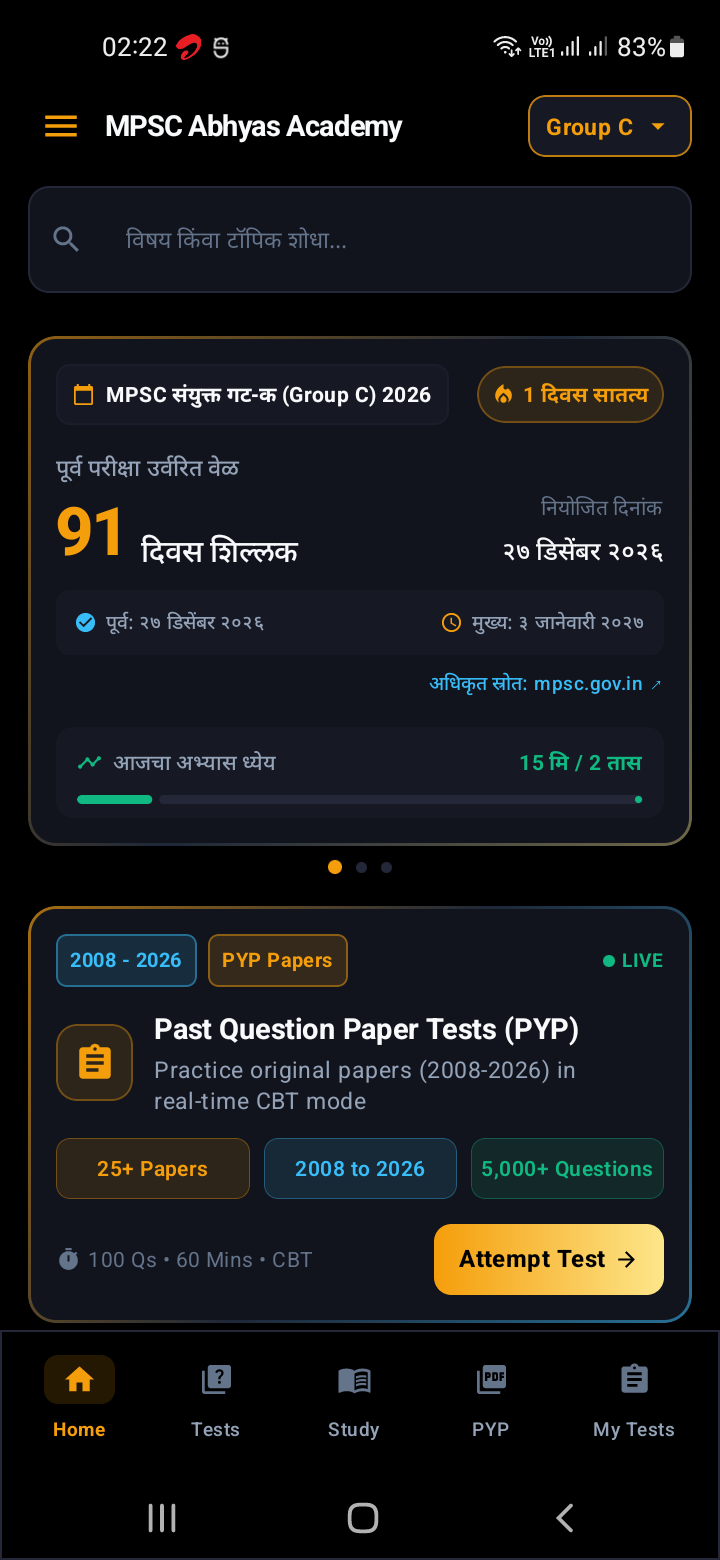
अधिकृत मोबाईल ॲप • OFFICIAL ANDROID APP

MPSC Abhyas ॲपसह सुरू करा सर्वोत्तम तयारी

Start Your Preparation with MPSC Abhyas Mobile App

महाराष्ट्र लोकसेवा आयोग (MPSC) राज्यसेवा, गट-ब व गट-क परीक्षांसाठी ५०,०००+ सराव प्रश्न, मागील वर्षांच्या मूळ प्रश्नपत्रिका (PYQs), सविस्तर स्पष्टीकरणे आणि राज्यस्तरीय रँकिंग — आता आपल्या मोबाईलमध्ये!

  • खऱ्या परीक्षेसारखा CBT अनुभव: ०.२५ नकारात्मक गुणांकन व अचूक टाइमर
  • विषय, विभाग व घटक टेस्ट्स: सखोल सराव आणि प्रत्येक घटकाचे विश्लेषण
  • सखोल विश्लेषण व अचूकता ट्रॅकर: प्रत्येक प्रश्नाचे सविस्तर उत्तर स्पष्टीकरण व ०.२५ निगेटिव्ह मार्किंग
★★★★★ ४.९ रेटिंग • गुगल प्ले स्टोअरवर उपलब्ध • १००% सुरक्षित व मोफत
MPSC Abhyas Dashboard
MPSC Abhyas Test Series
नवीन: विषय, विभाग व घटक टेस्ट्स