📜 मागील वर्षांच्या प्रश्नपत्रिका (PYP संच) • TOPIC PRACTICE HUB

पोलीस उपनिरीक्षक (विभागीय) पूर्व परीक्षा २०१७ (पृष्ठ 2)

MPSC Departmental PSI Prelims 2017 (PYP) — Official Previous Year Question Papers (PYPs)

'पोलीस उपनिरीक्षक (विभागीय) पूर्व परीक्षा २०१७' या घटकावरील आयोगाचे मागील वर्षांचे प्रश्न (PYQs) व अद्ययावत संभाव्य प्रश्न सविस्तर मराठी व इंग्रजी स्पष्टीकरणासह सोडवा.

अधिकृत सराव प्रश्न 100 MCQs
विषय विभाग आयोगाचे मूळ पेपर्स (PYP)
पृष्ठ क्रमांक 2 / 5
🎯 MPSC राज्यसेवा 🎯 MPSC संयुक्त गट-ब (PSI/STI/ASO) 🎯 MPSC संयुक्त गट-क (तलाठी समाविष्ट) 🎯 पोलीस भरती 🎯 खात्यांतर्गत PSI

📝 घटकनिहाय सोडवलेले प्रश्न (Canonical Solved MCQs)

प्रश्न 21 ते 40 (एकूण 100)
प्रश्न #22 📅 0 2017
+1.0 / -0.25
विसंगत गट ओळखा.
अ. अचल, नग, शैल, भूधर
ब. अंबू, पय, नीर, तोय
क. कांता, दारा, जाया, सरिता
ड. प्रख्यात, नामांकित, ख्यातनाम, विख्यात

पर्यायी उत्तरे :
(1) फक्त अ आणि ब
(2) फक्त क
(3) फक्त ड
(4) फक्त अ
EN Identify the odd group.
a. Achal, Nag, Shail, Bhudhar
b. Ambu, Pay, Neer, Toy
c. Kanta, Dara, Jaya, Sarita
d. Prakhyat, Namankit, Khyatnam, Vikhyat

Answer options :
(1) a and b only
(2) c only
(3) d only
(4) a only
  • (A) फक्त अ आणि ब
  • (B) फक्त क
  • (C) फक्त ड
  • (D) फक्त अ
अचूक उत्तर: पर्याय (B) फक्त क

प्रश्न #23 📅 0 2017
+1.0 / -0.25
‘कायदेशीर’ याच्या विरुद्ध अर्थ व्यक्त करणारा शब्द पुढीलपैकी कोणता ?
EN Which of the following words expresses the opposite meaning of 'Legal' (कायदेशीर)?
  • (A) अवैद्य
  • (B) अवैध
  • (C) वैध
  • (D) अवैध्य
अचूक उत्तर: पर्याय (B) अवैध

योग्य उत्तर: (2) अवैध स्पष्टीकरण: * कायदेशीर: कायद्यानुसार योग्य असलेले, कायद्याला धरून असलेले म्हणजेच ‘वैध’ (Legal / Valid). * याचा विरुद्धार्थी शब्द: कायद्याच्या विरुद्ध असलेले, गैरकायदेशीर म्हणजेच ‘अवैध’ (Illegal / Unlawful / Invalid). * इतर...

प्रश्न #24 📅 0 2017
+1.0 / -0.25
पुढे दिलेल्या दोन गटांच्या योग्य जोड्या जुळवा.
अ. तलाव
ब. मुख
क. हरिण
ड. रक्त

I. कुरंग
II. असृक्
III. सारस
IV. आनन

पर्यायी उत्तरे :
(1) III, IV, II, I
(2) II, III, IV, I
(3) IV, II, I, III
(4) III, IV, I, II
EN Match the following two groups correctly :
a. Talav (तलाव)
b. Mukh (मुख)
c. Harin (हरिण)
d. Rakt (रक्त)

I. Kurang
II. Asruk
III. Saras
IV. Aanan

Answer options :
(1) III, IV, II, I
(2) II, III, IV, I
(3) IV, II, I, III
(4) III, IV, I, II
  • (A) III, IV, II, I
  • (B) II, III, IV, I
  • (C) IV, II, I, III
  • (D) III, IV, I, II
अचूक उत्तर: पर्याय (D) III, IV, I, II

योग्य उत्तर: (4) III, IV, I, II स्पष्टीकरण: शब्दांचे संस्कृत तत्सम व प्रमाण समानार्थी शब्दांशी योग्य जुळणी खालीलप्रमाणे आहे: * अ. तलाव - III. सारस: 'सारस' (सरस् / कासार) म्हणजे तलाव किंवा सरोवर. * ब. मुख - IV. आनन: 'आनन' म्हणजे तोंड, मुख किंवा चेहरा...

प्रश्न #25 📅 0 2017
+1.0 / -0.25
‘आमचे शरीर सुदृढ व्हावे, म्हणून आम्ही दररोज योगासने करतो’ - वाक्य प्रकार ओळखा.
EN 'We do yogasanas daily so that our body becomes healthy' - Identify the sentence type.
  • (A) विकल्पबोधक संयुक्त वाक्य
  • (B) कारणबोधक मिश्र वाक्य
  • (C) उद्देशबोधक मिश्र वाक्य
  • (D) संकेतबोधक मिश्र वाक्य
अचूक उत्तर: पर्याय (C) उद्देशबोधक मिश्र वाक्य

योग्य उत्तर: (3) उद्देशबोधक मिश्र वाक्य स्पष्टीकरण: * उद्देशबोधक मिश्र वाक्य: जेव्हा गौण वाक्यातून मुख्य वाक्यातील कृतीचा उद्देश किंवा हेतू (Purpose/Intention) स्पष्ट होतो, तेव्हा त्या वाक्याला उद्देशबोधक मिश्र वाक्य म्हणतात. - यासाठी *म्हणून...

प्रश्न #26 📅 0 2017
+1.0 / -0.25
अधोरेखित भागाचा अचूक अर्थ ओळखा: 'Every mortal has to pay the debt of nature one day.'
EN Identify the correct meaning of the underlined part.
Every mortal has to pay the debt of nature one day.
  • (A) to bear the expenses (खर्च सहन करणे)
  • (B) to die (मरण पावणे)
  • (C) to face difficulties (अडचणींना तोंड देणे)
  • (D) to return his money (आपले पैसे परत करणे)
अचूक उत्तर: पर्याय (B) to die (मरण पावणे)

योग्य उत्तर: (2) to die (मरण पावणे) स्पष्टीकरण: * 'Pay the debt of nature' (वाक्प्रचार): हा एक पारंपरिक इंग्रजी वाक्प्रचार (idiom / euphemism) असून त्याचा अर्थ 'मरण पावणे' (to die) असा होतो. * माणसाचे शरीर हे निसर्गाचे देणं असून प्रत्येक मर्त्य...

प्रश्न #27 📅 0 2017
+1.0 / -0.25
अधोरेखित मोडल ऑक्झिलरी काय दर्शवते ? 'You can go now.'
EN What does the underlined modal auxiliary suggest ?
You can go now.
  • (A) Permission (परवानगी)
  • (B) Possibility (शक्यता)
  • (C) Ability (क्षमता/सामर्थ्य)
  • (D) Request (विनंती)
अचूक उत्तर: पर्याय (A) Permission (परवानगी)

योग्य उत्तर: (1) Permission (परवानगी) स्पष्टीकरण: * Modal Auxiliary 'Can' चे कार्य: 'Can' या साहाय्यकारी क्रियापदाचा वापर प्रामुख्याने क्षमता (Ability), शक्यता (Possibility) आणि परवानगी (Permission) दर्शवण्यासाठी केला जातो. * दिलेल्या वाक्यात: *‘You...

प्रश्न #28 📅 0 2017
+1.0 / -0.25
वाक्य अर्थपूर्ण करण्यासाठी योग्य पर्याय निवडा: 'Plans may ________ due to insufficient funds.'
EN Select the correct alternative to complete the sentence meaningfully.
Plans may ________ due to insufficient funds.
  • (A) fall out
  • (B) fall apart
  • (C) fall off
  • (D) fall through
अचूक उत्तर: पर्याय (D) fall through

योग्य उत्तर: (4) fall through स्पष्टीकरण: * 'Fall through' (वाक्प्रचार / Phrasal Verb): याचा अर्थ एखादी योजना, करार किंवा बेत यशस्वी न होता 'फसणे, निष्फळ ठरणे किंवा रद्द होणे' (to fail to happen, be completed, or materialize) असा होतो. - उदा. "The...

प्रश्न #29 📅 0 2017
+1.0 / -0.25
योग्य शब्द निवडा: 'His handwriting is not ________.'
EN Choose the correct word.
His handwriting is not ________.
  • (A) legible (वाचता येण्याजोगे)
  • (B) eligible (पात्र)
  • (C) ineligible (अपात्र)
  • (D) illegal (बेकायदेशीर)
अचूक उत्तर: पर्याय (A) legible (वाचता येण्याजोगे)

योग्य उत्तर: (1) legible (वाचता येण्याजोगे / सुवाच्य) स्पष्टीकरण: * 'Legible' (विशेषण): ज्याचा अर्थ 'स्पष्ट वाचता येण्याजोगे / सुवाच्य' (clear enough to read) असा होतो. - हस्ताक्षराच्या (handwriting) बाबतीत सुवाच्य लेखनाला 'legible' आणि जे वाचता येत...

प्रश्न #30 📅 0 2017
+1.0 / -0.25
योग्य वाक्य ओळखा:
a. The flowers smell sweet.
b. She looks charmingly.

पर्यायी उत्तरे :
(1) a only
(2) b only
(3) Both a and b
(4) Neither a nor b
EN Identify the correct sentence.
a. The flowers smell sweet.
b. She looks charmingly.

Answer options :
(1) a only
(2) b only
(3) Both a and b
(4) Neither a nor b
  • (A) a only
  • (B) b only
  • (C) Both a and b
  • (D) Neither a nor b
अचूक उत्तर: पर्याय (A) a only

योग्य उत्तर: (1) a only स्पष्टीकरण: * नियम (Verbs of Perception / Linking Verbs): इंग्रजी व्याकरणामध्ये ज्ञानेंद्रियांशी संबंधित क्रियापदे (उदा. *smell, taste, feel, look, sound, appear, seem, remain*) ही जेव्हा 'लिंकिंग व्हर्ब्स' (Linking verbs)...

प्रश्न #31 📅 0 2017
+1.0 / -0.25
खालील पर्यायांमधून योग्य वाक्य निवडा.
EN Choose the correct sentence from the options given.
  • (A) He prevented me to go their.
  • (B) He prevented me going.
  • (C) He prevented me from going there.
  • (D) He prevented me for going there.
अचूक उत्तर: पर्याय (C) He prevented me from going there.

योग्य उत्तर: (3) He prevented me from going there. स्पष्टीकरण: * 'Prevent' या क्रियापदाची रचना: इंग्रजी व्याकरण नियमांनुसार 'Prevent' (प्रतिबंध करणे/थांबवणे) या क्रियापदानंतर 'from + Gerund (v-ing)' हीच रचना वापरली जाते: $$\text{Subject} +...

प्रश्न #32 📅 0 2017
+1.0 / -0.25
योग्य विरामचिन्हे असलेली वाक्ये ओळखा:
a. I like poems, stories and prose.
b. Mango, apple, date, almond, watermelon, etc. are useful fruits.
c. I woke up; I got out of bed.

पर्यायी उत्तरे :
(1) a and c only
(2) a and b only
(3) b and c only
(4) All of the above
EN Identify the sentences punctuated correctly.
a. I like poems, stories and prose.
b. Mango, apple, date, almond, watermelon, etc. are useful fruits.
c. I woke up; I got out of bed.

Answer options :
(1) a and c only
(2) a and b only
(3) b and c only
(4) All of the above
  • (A) a and c only
  • (B) a and b only
  • (C) b and c only
  • (D) All of the above
अचूक उत्तर: पर्याय (D) All of the above

योग्य उत्तर: (4) All of the above स्पष्टीकरण: विरामचिन्हांच्या (Punctuation Marks) नियमांनुसार तिन्ही वाक्यांची पडताळणी: * वाक्य a बरोबर आहे: *‘I like poems, stories and prose.’* - एकाच जातीच्या नामांची यादी दर्शवताना स्वल्पविराम (comma) चा योग्य...

प्रश्न #33 📅 0 2017
+1.0 / -0.25
योग्य सर्वनाम निवडा: '________ do you wish to see ?'
EN Choose the correct pronoun.
________ do you wish to see ?
  • (A) Who
  • (B) Whom
  • (C) Whose
  • (D) None of the above
अचूक उत्तर: पर्याय (B) Whom

योग्य उत्तर: (2) Whom स्पष्टीकरण: * Who vs Whom चा नियम: - Who: कर्ता विभक्ती (Subjective / Nominative case) मध्ये वापरले जाते (उदा. Who came here?). - Whom: कर्म विभक्ती (Objective / Accusative case) मध्ये वापरले जाते. - Whose: षष्ठी / मालकी दर्शक...

प्रश्न #34 📅 0 2017
+1.0 / -0.25
योग्य क्वेश्चन टॅग निवडा:
a. We must go now, mustn’t we ?
b. You aren’t leaving, aren’t you ?
c. You can drive, can’t you ?

पर्यायी उत्तरे :
(1) a and c only
(2) b and c only
(3) c only
(4) a, b and c
EN Choose the correct question tag(s).
a. We must go now, mustn’t we ?
b. You aren’t leaving, aren’t you ?
c. You can drive, can’t you ?

Answer options :
(1) a and c only
(2) b and c only
(3) c only
(4) a, b and c
  • (A) a and c only
  • (B) b and c only
  • (C) c only
  • (D) a, b and c
अचूक उत्तर: पर्याय (A) a and c only

प्रश्न #35 📅 0 2017
+1.0 / -0.25
दिलेल्या वाक्याचा योग्य पॅसिव्ह व्हॉइस ओळखा:
'What do you do now ?'

(1) What has been done by you, now ?
(2) What is being done by you, now ?
(3) What are you doing now ?
(4) What has been being done by you, now ?
EN Identify the correct passive voice of the given sentence.
What do you do now ?

(1) What has been done by you, now ?
(2) What is being done by you, now ?
(3) What are you doing now ?
(4) What has been being done by you, now ?
  • (A) What has been done by you, now ?
  • (B) What is being done by you, now ?
  • (C) What are you doing now ?
  • (D) What has been being done by you, now ?
अचूक उत्तर: पर्याय (B) What is being done by you, now ?

योग्य उत्तर: (2) What is being done by you, now ? ⚠️ टीप / प्रश्न व उत्तरतालिका स्पष्टीकरण: * आयोगाच्या अधिकृत उत्तरतालिकेनुसार (Set A Key) पर्याय क्रमांक (2) हे उत्तर देण्यात आले आहे. * व्याकरणिक स्पष्टीकरण: - मूळ वाक्य: *‘What do you do now ?’*...

प्रश्न #36 📅 0 2017
+1.0 / -0.25
दिलेल्या वाक्याचे सर्वोत्तम इनडायरेक्ट रूप निवडा:
“Do you suppose you know better than your own father ?” jeered his angry mother.

(1) His angry mother jeers and asks whether he supposed that he knew better than his own father.
(2) His angry mother jeered and asked that he supposed whether he knew better than his own father.
(3) His angry mother jeered and asked whether he supposed that he knew better than his own father.
(4) His angry mother jeered and asked whether he supposed that he knows better than his own father.
EN Choose the best indirect form of the given sentence.
“Do you suppose you know better than your own father ?” jeered his angry mother.

(1) His angry mother jeers and asks whether he supposed that he knew better than his own father.
(2) His angry mother jeered and asked that he supposed whether he knew better than his own father.
(3) His angry mother jeered and asked whether he supposed that he knew better than his own father.
(4) His angry mother jeered and asked whether he supposed that he knows better than his own father.
  • (A) His angry mother jeers and asks whether he supposed that he knew better than his own father.
  • (B) His angry mother jeered and asked that he supposed whether he knew better than his own father.
  • (C) His angry mother jeered and asked whether he supposed that he knew better than his own father.
  • (D) His angry mother jeered and asked whether he supposed that he knows better than his own father.
अचूक उत्तर: पर्याय (C) His angry mother jeered and asked whether he supposed that he knew better than his own father.

योग्य उत्तर: (3) His angry mother jeered and asked whether he supposed that he knew better than his own father. स्पष्टीकरण: * डायरेक्ट ते इनडायरेक्ट स्पीचचे नियम: 1. रिपोर्टिंग व्हर्ब: 'jeered' (भूतकाळ) असल्याने रिपोर्टिंग क्रियापद भूतकाळातच राहील...

प्रश्न #37 📅 0 2017
+1.0 / -0.25
खालील वाक्याचे योग्य इनडायरेक्ट नरेशन ओळखा: He says, “I am working hard.”
EN Identify the correct indirect narration of the sentence given below :
He says, “I am working hard.”
  • (A) He said that he was working hard.
  • (B) He says that he is working hard.
  • (C) He says he is working hard.
  • (D) He said that he is working hard.
अचूक उत्तर: पर्याय (B) He says that he is working hard.

योग्य उत्तर: (2) He says that he is working hard. स्पष्टीकरण: * अतिशय महत्त्वाचा नियम: जर रिपोर्टिंग व्हर्ब (Reporting Verb) हे वर्तमानकाळात (Simple Present - उदा. says) किंवा भविष्यकाळात (Simple Future - उदा. will say) असेल, तर इनडायरेक्ट स्पीच...

प्रश्न #38 📅 0 2017
+1.0 / -0.25
अधोरेखित क्लॉजचा प्रकार ओळखा: 'Those who are honest succeed in life.'
EN Identify the clause underlined.
Those who are honest succeed in life.
  • (A) Noun clause
  • (B) Adjective clause
  • (C) Adverb clause of reason
  • (D) Adverb clause of condition
अचूक उत्तर: पर्याय (B) Adjective clause

योग्य उत्तर: (2) Adjective clause (विशेषण उपवाक्य) स्पष्टीकरण: * Adjective Clause (विशेषण उपवाक्य): जे गौण उपवाक्य (Subordinate clause) मुख्य वाक्यातील एखाद्या नामाबद्दल (Noun) किंवा सर्वनामाबद्दल (Pronoun) अधिक माहिती सांगून विशेषणाचे कार्य करते...

प्रश्न #39 📅 0 2017
+1.0 / -0.25
व्हॉइस बदला: 'Mr. Krishnaji teaches us grammar.'
EN Change the voice.
Mr. Krishnaji teaches us grammar.
  • (A) Grammar teaches us Mr. Krishnaji.
  • (B) We are taught grammar by Mr. Krishnaji.
  • (C) We are taught by Mr. Krishnaji, grammar.
  • (D) Grammar teaches us by Mr. Krishnaji.
अचूक उत्तर: पर्याय (B) We are taught grammar by Mr. Krishnaji.

योग्य उत्तर: (2) We are taught grammar by Mr. Krishnaji. स्पष्टीकरण: * द्विकर्मक वाक्य (Ditransitive sentence) पॅसिव्ह व्हॉइस नियम: - मूळ वाक्य: *Mr. Krishnaji (Subject) + teaches (Simple Present Verb) + us (Indirect Object - व्यक्ती) + grammar...

प्रश्न #40 📅 0 2017
+1.0 / -0.25
उताऱ्यानुसार ह्युएन त्संगच्या भारत प्रवासाचा उद्देश काय होता ? 'The purpose of Hiuen Tsang to travel to India was...'
EN The purpose of Hiuen Tsang to travel to India was
(1) to study the influence of Buddhism on Hindu religion.
(2) to spread his religion in India.
(3) to undertake pilgrimage and enhance knowledge.
(4) to study powerful cultural forces in India.
  • (A) to study the influence of Buddhism on Hindu religion.
  • (B) to spread his religion in India.
  • (C) to undertake pilgrimage and enhance knowledge.
  • (D) to study powerful cultural forces in India.
अचूक उत्तर: पर्याय (D) to study powerful cultural forces in India.

योग्य उत्तर: (4) to study powerful cultural forces in India. स्पष्टीकरण: * उताऱ्याच्या दुसऱ्या परिच्छेदाची सुरुवात: *“Already in the 7th century, Buddhism was a powerful cultural force among the educated classes of China... He studied Sanskrit and...

🎯 या घटकाशी संबंधित सराव टेस्ट सिरीज

सर्व टेस्ट सिरीज →
अधिकृत मोबाईल ॲप • OFFICIAL ANDROID APP

MPSC Abhyas ॲपसह सुरू करा सर्वोत्तम तयारी

Start Your Preparation with MPSC Abhyas Mobile App

महाराष्ट्र लोकसेवा आयोग (MPSC) राज्यसेवा, गट-ब व गट-क परीक्षांसाठी ५०,०००+ सराव प्रश्न, मागील वर्षांच्या मूळ प्रश्नपत्रिका (PYQs), सविस्तर स्पष्टीकरणे आणि राज्यस्तरीय रँकिंग — आता आपल्या मोबाईलमध्ये!

  • खऱ्या परीक्षेसारखा CBT अनुभव: ०.२५ नकारात्मक गुणांकन व अचूक टाइमर
  • विषय, विभाग व घटक टेस्ट्स: सखोल सराव आणि प्रत्येक घटकाचे विश्लेषण
  • सखोल विश्लेषण व अचूकता ट्रॅकर: प्रत्येक प्रश्नाचे सविस्तर उत्तर स्पष्टीकरण व ०.२५ निगेटिव्ह मार्किंग
★★★★★ ४.९ रेटिंग • गुगल प्ले स्टोअरवर उपलब्ध • १००% सुरक्षित व मोफत
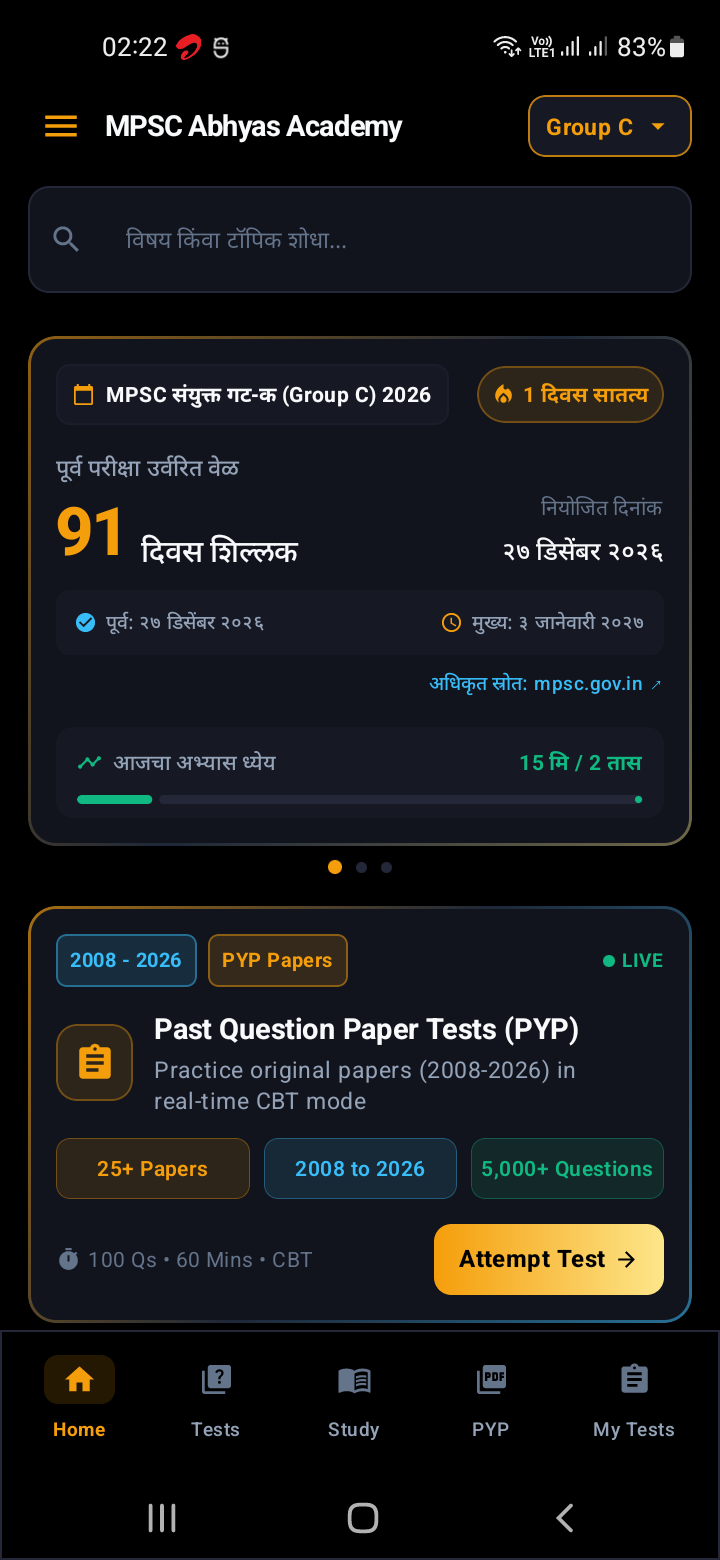
MPSC Abhyas Dashboard
MPSC Abhyas Test Series
नवीन: विषय, विभाग व घटक टेस्ट्स