
🧮 बुद्धिमत्ता व अंकगणित (CSAT) • TOPIC PRACTICE HUB

अंकगणित (Quantitative Aptitude) (पृष्ठ 273)

Quantitative Aptitude & Mathematical Ability — CSAT - Quantitative Aptitude & Reasoning

'अंकगणित (Quantitative Aptitude)' या घटकावरील आयोगाचे मागील वर्षांचे प्रश्न (PYQs) व अद्ययावत संभाव्य प्रश्न सविस्तर मराठी व इंग्रजी स्पष्टीकरणासह सोडवा.

अधिकृत सराव प्रश्न 6,440 MCQs
विषय विभाग अंकगणित व बुद्धिमत्ता
पृष्ठ क्रमांक 273 / 322
🎯 आरोग्य विभाग

🗂️ उपघटक निवडा (Subtopics in अंकगणित (Quantitative Aptitude))

20 उपघटक
संख्या पद्धती, प्रकार व विभाज्यतेच्या कसोट्या
Number System, Classifications & Divisibility Tests
151 प्रश्न
पदावली, कंस व बॉडमास नियम (BODMAS)
BODMAS Rule & Mathematical Simplification
38 प्रश्न
घातांक, वर्ग, वर्गमूळ, घन व घनमूळ
Indices, Squares, Square Roots, Cubes & Cube Roots
15 प्रश्न
लसावि आणि मसावि (LCM & HCF)
Lowest Common Multiple & Highest Common Factor
20 प्रश्न
समीकरणे व शाब्दिक उदाहरणे
Linear Equations & Applied Word Problems
129 प्रश्न
सरासरी (Averages)
Averages & Weighted Mean Calculation
58 प्रश्न
शेकडेवारी व टक्केवारी (Percentages)
Percentages, Growth & Decline Calculations
45 प्रश्न
नफा, तोटा, छापील किंमत, सूट व कमिशन
Profit, Loss, Marked Price & Trade Discounts
28 प्रश्न
गुणोत्तर, प्रमाण व भागीदारी
Ratio, Proportion & Business Partnership
33 प्रश्न
वयवारी: वयावर आधारित गणिते
Problems on Ages & Age Relations
39 प्रश्न
सरळव्याज आणि चक्रवाढव्याज
Simple Interest & Compound Interest
35 प्रश्न
काळ, काम, वेग व मजूर
Time, Work, Rates & Wages
27 प्रश्न
नळ आणि पाण्याची टाकी
Pipes & Cisterns Filling Capacity
3 प्रश्न
वेग, वेळ, अंतर व सापेक्ष गती
Speed, Time, Distance & Relative Motion
46 प्रश्न
रेल्वे व आगगाडीवर आधारित उदाहरणे
Problems on Trains & Platform Crossing
16 प्रश्न
बोट, प्रवाह व प्रवाहाचा वेग
Boats & Streams: Upstream & Downstream
12 प्रश्न
मिश्रणे, मिश्रण प्रमाण व अल्युगेशन
Mixtures & Alligation Principles
4 प्रश्न
अंकगणितीय व भूमितीय श्रेढी (A.P. & G.P.)
Arithmetic & Geometric Progressions
10 प्रश्न
संभाव्यता व संच सिद्धांत (Probability & Sets)
Probability & Set Theory
33 प्रश्न
माहितीचे विश्लेषण व सांख्यिकी (Data Interpretation)
Data Interpretation, Tables & Charts
1 प्रश्न

📝 घटकनिहाय सोडवलेले प्रश्न (Canonical Solved MCQs)

प्रश्न 5,441 ते 5,460 (एकूण 6,440)
प्रश्न #5441 📅 MPSC Rajyaseva Online Test Series 2026 📂 अंकगणित (Quantitative Aptitude)
+1.0 / -0.25
'ज्ञान हे उपयुक्त असो वा नसो; त्याचें पावित्र्य स्वतः सिद्ध आहे. जिज्ञासापूर्तीचा निरागस आनंद, मानवाच्या अंतःशक्तीचा स्व-तंत्र विलास व संपूर्ण विकास हेच ज्ञानाचे खरे प्रयोजन आहे' असा पक्ष हिरीरीने मांडला जातो. पण ज्ञानाचे चिरंतन, पावित्र्य व त्यांची देश कालसापेक्ष उपयुक्तता यांमध्ये मुळातच विरोध आहे असे मानण्याचे कारण नाही. मानवी बुद्धीला आपल्या सामर्थ्याचा प्रत्यय आणून देणारे सत्यज्ञानाचे नवे उन्मेष निःसंशय आनंददायक असतात. त्या वेळी विद्यावंताची मनःस्थिती 'कळो न ये सुखदुःख। तान हरपली भूक' अशी होत असेल. त्याची सामाजिक अस्मिता, किंबहुना बाह्य सृष्टी व मनुष्यत्त्व यातील द्वैत ही त्या अनुभवात क्षणभर विरून जात असेल. स्वान्तः सुखाच्या ह्या क्षणावरील त्याचा नैसर्गिक हक्क कोणीच हिरावून घेऊ शकत नाही. मात्र ज्ञानसमाधीचा हा फक्त क्षणच असतो, तो ज्ञानोपासकाच्या जीवनाचा स्थायी भाव होऊ शकत नाही. विद्यानंद हा आत्मनिष्ठ व अलौकिक आहे हे मान्य केले, तरी विद्याभिवृद्धीचा सामाजिक संदर्भ, त्यासाठी खर्च पडलेले सामूहिक श्रम व संपत्ती यांचा विचार लौकिक दृष्टीनेच करावा लागेल. ज्ञानाची निर्मिती, विकास आणि प्रसार ही कार्ये सातत्याने चालू राहायची असतील, तर विद्यावंतां आपली सामाजिक जबाबदारी टाळता येणार नाही. मात्र त्यासाठी त्यांनी आपले ज्ञानैकनिष्ठेचे ब्रीद सोडण्याची. किंवा विचार स्वातंत्र्याला पारखे होण्याची मुळीच गरज नाही. विज्ञानाची मूळ प्रेरणा जरी मानवाच्या अंतिम हिताची असली, तरी प्रत्येक शास्त्रीय शोध वा सिद्धान्त तात्कालिक दृष्ट्या उपयुक्त ठरलाच पाहिजे असे कोणीही म्हणणार नाही. कोणतीही नवी उपपत्ती जेव्हा मांडली जाते तेव्हा एकंदर सामाजिक जीवनावर तिचे दूरगामी परिणाम काय होतील याचा खात्रीशीर निर्णय करणे कोणालाच शक्य नसते. कोणत्याही सिद्धान्ताच्या उपयोजनेसाठी विचाराच्या व व्यवहाराच्या प्रांतांत पुरेसे अनुकूल वातावरण नसेल तर तो काही काळ अगदी निरुपयोगी किंवा विघातकही ठरण्याचा संभव असतो. म्हणून एखाद दुसऱ्या सिद्धान्ताच्या उपयुक्तता पेक्षा ज्ञानोपासक यांच्या भूमिका प्रश्न अधिक महत्त्वाचा आहे.
नैसर्गिक शास्त्रे व सामाजिक शास्त्रे यांत दुसराही एक मूलभूत फरक आहे. नैसर्गिक शास्त्रे बाह्य सृष्टीचा शोध घेतात. मानवाचे जीवन समृद्ध व सुखावह करणे हेच त्यांचे मूळ प्रयोजन होय. शास्त्रीय शोधांचा वापर मानवाच्या सुखासाठी न होता संहारासाठी होऊ लागला म्हणजे ज्ञाननिष्ठ की मानवनिष्ठ असा प्रश्न शास्त्रज्ञ पुढे उभा राहतो. सामाजिक शास्त्रे तर व्यक्ती, जाती, वर्ग, प्रदेश, राष्ट्रे व मानव समाज यांच्या प्रवृत्तींचा व परस्पर संबंधांचा विचार करतात. हृह्या प्रवृत्ती, हे संबंध, कधी परस्परपूरक तर कधी परस्परविरोधी असतात. एकाला जे लाभदायक ते दुसऱ्याला हानिकारक ठरण्याचा संभव असतो. शिवाय जाती, वर्ग, प्रांत यांसारखा कोणताही घटक पूर्णपणे एकजिनसी नसतो. त्यात एकमेकांना छेद देणारी दंद्व असतात. अशा वेळी समाज जीवनाबद्दल काही निष्कर्ष काढण्याची तर सामाजिक कलहात उपपत्ती पातळीवर का होईना; पण निश्चित बाजू घ्यावी लागते.
विज्ञानाचे प्रमुख उद्दिष्ट कोणते ?
अ. मानवाचे जीवन समृद्ध व सुखावह करणे.
ब. व्यक्ती व मानवसमाज यांच्यातील परस्पर संबंधांचा विचार करणे.
क. शोधांचा वापर सुखापेक्षा संहारासाठी करणे
ड. सृष्टीतील सत्यांचा शोध घेणे
  • (A) अ आणि ड
  • (B) अ आणि ब
  • (C) अ आणि क
  • (D) फक्त अ
अचूक उत्तर: पर्याय (A) अ आणि ड

प्रस्तुत प्रश्नाचे अचूक उत्तर पर्याय (1) 'अ आणि ड' हे आहे. • तपशीलवार विश्लेषण: MPSC राज्यसेवा अभ्यासक्रमानुसार या संकल्पनेचा थेट संबंध राज्यसेवा पूर्व परीक्षेच्या विचारसरणीशी असून, सखोल विश्लेषणाला प्राधान्य दिले जाते. • इतर पर्याय: उर्वरित पर्याय...

प्रश्न #5442 📅 MPSC Rajyaseva Online Test Series 2026 📂 अंकगणित (Quantitative Aptitude)
+1.0 / -0.25
'ज्ञान हे उपयुक्त असो वा नसो; त्याचें पावित्र्य स्वतः सिद्ध आहे. जिज्ञासापूर्तीचा निरागस आनंद, मानवाच्या अंतःशक्तीचा स्व-तंत्र विलास व संपूर्ण विकास हेच ज्ञानाचे खरे प्रयोजन आहे' असा पक्ष हिरीरीने मांडला जातो. पण ज्ञानाचे चिरंतन, पावित्र्य व त्यांची देश कालसापेक्ष उपयुक्तता यांमध्ये मुळातच विरोध आहे असे मानण्याचे कारण नाही. मानवी बुद्धीला आपल्या सामर्थ्याचा प्रत्यय आणून देणारे सत्यज्ञानाचे नवे उन्मेष निःसंशय आनंददायक असतात. त्या वेळी विद्यावंताची मनःस्थिती 'कळो न ये सुखदुःख। तान हरपली भूक' अशी होत असेल. त्याची सामाजिक अस्मिता, किंबहुना बाह्य सृष्टी व मनुष्यत्त्व यातील द्वैत ही त्या अनुभवात क्षणभर विरून जात असेल. स्वान्तः सुखाच्या ह्या क्षणावरील त्याचा नैसर्गिक हक्क कोणीच हिरावून घेऊ शकत नाही. मात्र ज्ञानसमाधीचा हा फक्त क्षणच असतो, तो ज्ञानोपासकाच्या जीवनाचा स्थायी भाव होऊ शकत नाही. विद्यानंद हा आत्मनिष्ठ व अलौकिक आहे हे मान्य केले, तरी विद्याभिवृद्धीचा सामाजिक संदर्भ, त्यासाठी खर्च पडलेले सामूहिक श्रम व संपत्ती यांचा विचार लौकिक दृष्टीनेच करावा लागेल. ज्ञानाची निर्मिती, विकास आणि प्रसार ही कार्ये सातत्याने चालू राहायची असतील, तर विद्यावंतां आपली सामाजिक जबाबदारी टाळता येणार नाही. मात्र त्यासाठी त्यांनी आपले ज्ञानैकनिष्ठेचे ब्रीद सोडण्याची. किंवा विचार स्वातंत्र्याला पारखे होण्याची मुळीच गरज नाही. विज्ञानाची मूळ प्रेरणा जरी मानवाच्या अंतिम हिताची असली, तरी प्रत्येक शास्त्रीय शोध वा सिद्धान्त तात्कालिक दृष्ट्या उपयुक्त ठरलाच पाहिजे असे कोणीही म्हणणार नाही. कोणतीही नवी उपपत्ती जेव्हा मांडली जाते तेव्हा एकंदर सामाजिक जीवनावर तिचे दूरगामी परिणाम काय होतील याचा खात्रीशीर निर्णय करणे कोणालाच शक्य नसते. कोणत्याही सिद्धान्ताच्या उपयोजनेसाठी विचाराच्या व व्यवहाराच्या प्रांतांत पुरेसे अनुकूल वातावरण नसेल तर तो काही काळ अगदी निरुपयोगी किंवा विघातकही ठरण्याचा संभव असतो. म्हणून एखाद दुसऱ्या सिद्धान्ताच्या उपयुक्तता पेक्षा ज्ञानोपासक यांच्या भूमिका प्रश्न अधिक महत्त्वाचा आहे.
नैसर्गिक शास्त्रे व सामाजिक शास्त्रे यांत दुसराही एक मूलभूत फरक आहे. नैसर्गिक शास्त्रे बाह्य सृष्टीचा शोध घेतात. मानवाचे जीवन समृद्ध व सुखावह करणे हेच त्यांचे मूळ प्रयोजन होय. शास्त्रीय शोधांचा वापर मानवाच्या सुखासाठी न होता संहारासाठी होऊ लागला म्हणजे ज्ञाननिष्ठ की मानवनिष्ठ असा प्रश्न शास्त्रज्ञ पुढे उभा राहतो. सामाजिक शास्त्रे तर व्यक्ती, जाती, वर्ग, प्रदेश, राष्ट्रे व मानव समाज यांच्या प्रवृत्तींचा व परस्पर संबंधांचा विचार करतात. हृह्या प्रवृत्ती, हे संबंध, कधी परस्परपूरक तर कधी परस्परविरोधी असतात. एकाला जे लाभदायक ते दुसऱ्याला हानिकारक ठरण्याचा संभव असतो. शिवाय जाती, वर्ग, प्रांत यांसारखा कोणताही घटक पूर्णपणे एकजिनसी नसतो. त्यात एकमेकांना छेद देणारी दंद्व असतात. अशा वेळी समाज जीवनाबद्दल काही निष्कर्ष काढण्याची तर सामाजिक कलहात उपपत्ती पातळीवर का होईना; पण निश्चित बाजू घ्यावी लागते.
ज्ञानोपासकांना कोणते लौकिक मान ठेवावे लागते ?
अ. ज्ञाननिर्मिती व प्रसार ही आपली सामाजिक जवाबदारी आहे
ब. ज्ञानसाधना हाच आपल्या जीवनाचा स्थायीभाव आहे.
क. ज्ञानवृद्धीचा सामाजिक संदर्भ कोणता आहे.
ड. ज्ञानवृद्धीसाठी उपयुक्त ठरलेले समूहाचे श्रम व संपत्ती यांचे मूल्य कोणते
आहे.
  • (A) फक्त क
  • (B) अ आणि क
  • (C) क आणि ड
  • (D) फक्त ड
अचूक उत्तर: पर्याय (C) क आणि ड

प्रस्तुत प्रश्नाचे अचूक उत्तर पर्याय (3) 'क आणि ड' हे आहे. • तपशीलवार विश्लेषण: MPSC राज्यसेवा अभ्यासक्रमानुसार या संकल्पनेचा थेट संबंध राज्यसेवा पूर्व परीक्षेच्या विचारसरणीशी असून, सखोल विश्लेषणाला प्राधान्य दिले जाते. • इतर पर्याय: उर्वरित पर्याय...

प्रश्न #5443 📅 MPSC Rajyaseva Online Test Series 2026 📂 अंकगणित (Quantitative Aptitude)
+1.0 / -0.25
'ज्ञान हे उपयुक्त असो वा नसो; त्याचें पावित्र्य स्वतः सिद्ध आहे. जिज्ञासापूर्तीचा निरागस आनंद, मानवाच्या अंतःशक्तीचा स्व-तंत्र विलास व संपूर्ण विकास हेच ज्ञानाचे खरे प्रयोजन आहे' असा पक्ष हिरीरीने मांडला जातो. पण ज्ञानाचे चिरंतन, पावित्र्य व त्यांची देश कालसापेक्ष उपयुक्तता यांमध्ये मुळातच विरोध आहे असे मानण्याचे कारण नाही. मानवी बुद्धीला आपल्या सामर्थ्याचा प्रत्यय आणून देणारे सत्यज्ञानाचे नवे उन्मेष निःसंशय आनंददायक असतात. त्या वेळी विद्यावंताची मनःस्थिती 'कळो न ये सुखदुःख। तान हरपली भूक' अशी होत असेल. त्याची सामाजिक अस्मिता, किंबहुना बाह्य सृष्टी व मनुष्यत्त्व यातील द्वैत ही त्या अनुभवात क्षणभर विरून जात असेल. स्वान्तः सुखाच्या ह्या क्षणावरील त्याचा नैसर्गिक हक्क कोणीच हिरावून घेऊ शकत नाही. मात्र ज्ञानसमाधीचा हा फक्त क्षणच असतो, तो ज्ञानोपासकाच्या जीवनाचा स्थायी भाव होऊ शकत नाही. विद्यानंद हा आत्मनिष्ठ व अलौकिक आहे हे मान्य केले, तरी विद्याभिवृद्धीचा सामाजिक संदर्भ, त्यासाठी खर्च पडलेले सामूहिक श्रम व संपत्ती यांचा विचार लौकिक दृष्टीनेच करावा लागेल. ज्ञानाची निर्मिती, विकास आणि प्रसार ही कार्ये सातत्याने चालू राहायची असतील, तर विद्यावंतां आपली सामाजिक जबाबदारी टाळता येणार नाही. मात्र त्यासाठी त्यांनी आपले ज्ञानैकनिष्ठेचे ब्रीद सोडण्याची. किंवा विचार स्वातंत्र्याला पारखे होण्याची मुळीच गरज नाही. विज्ञानाची मूळ प्रेरणा जरी मानवाच्या अंतिम हिताची असली, तरी प्रत्येक शास्त्रीय शोध वा सिद्धान्त तात्कालिक दृष्ट्या उपयुक्त ठरलाच पाहिजे असे कोणीही म्हणणार नाही. कोणतीही नवी उपपत्ती जेव्हा मांडली जाते तेव्हा एकंदर सामाजिक जीवनावर तिचे दूरगामी परिणाम काय होतील याचा खात्रीशीर निर्णय करणे कोणालाच शक्य नसते. कोणत्याही सिद्धान्ताच्या उपयोजनेसाठी विचाराच्या व व्यवहाराच्या प्रांतांत पुरेसे अनुकूल वातावरण नसेल तर तो काही काळ अगदी निरुपयोगी किंवा विघातकही ठरण्याचा संभव असतो. म्हणून एखाद दुसऱ्या सिद्धान्ताच्या उपयुक्तता पेक्षा ज्ञानोपासक यांच्या भूमिका प्रश्न अधिक महत्त्वाचा आहे.
नैसर्गिक शास्त्रे व सामाजिक शास्त्रे यांत दुसराही एक मूलभूत फरक आहे. नैसर्गिक शास्त्रे बाह्य सृष्टीचा शोध घेतात. मानवाचे जीवन समृद्ध व सुखावह करणे हेच त्यांचे मूळ प्रयोजन होय. शास्त्रीय शोधांचा वापर मानवाच्या सुखासाठी न होता संहारासाठी होऊ लागला म्हणजे ज्ञाननिष्ठ की मानवनिष्ठ असा प्रश्न शास्त्रज्ञ पुढे उभा राहतो. सामाजिक शास्त्रे तर व्यक्ती, जाती, वर्ग, प्रदेश, राष्ट्रे व मानव समाज यांच्या प्रवृत्तींचा व परस्पर संबंधांचा विचार करतात. हृह्या प्रवृत्ती, हे संबंध, कधी परस्परपूरक तर कधी परस्परविरोधी असतात. एकाला जे लाभदायक ते दुसऱ्याला हानिकारक ठरण्याचा संभव असतो. शिवाय जाती, वर्ग, प्रांत यांसारखा कोणताही घटक पूर्णपणे एकजिनसी नसतो. त्यात एकमेकांना छेद देणारी दंद्व असतात. अशा वेळी समाज जीवनाबद्दल काही निष्कर्ष काढण्याची तर सामाजिक कलहात उपपत्ती पातळीवर का होईना; पण निश्चित बाजू घ्यावी लागते.
ज्ञानाची पवित्रता आणि देशकाल सापेक्ष उपयुक्तता यामध्ये कोणते नाते असणे
आवश्यक आहे ?
अ. ज्ञानवंत व समूह यांच्या आनंदमयते चे
ब. समन्वयाचे
क. सामाजिक अस्मितेचे
ड. मानव समूहाच्या अंतिम हिताचे
  • (A) अ आणि ड
  • (B) ब आणि ड
  • (C) क आणि ड
  • (D) ब आणि क
अचूक उत्तर: पर्याय (A) अ आणि ड

प्रस्तुत प्रश्नाचे अचूक उत्तर पर्याय (1) 'अ आणि ड' हे आहे. • तपशीलवार विश्लेषण: MPSC राज्यसेवा अभ्यासक्रमानुसार या संकल्पनेचा थेट संबंध राज्यसेवा पूर्व परीक्षेच्या विचारसरणीशी असून, सखोल विश्लेषणाला प्राधान्य दिले जाते. • इतर पर्याय: उर्वरित पर्याय...

प्रश्न #5444 📅 MPSC Rajyaseva Online Test Series 2026 📂 अंकगणित (Quantitative Aptitude)
+1.0 / -0.25
Nalanda University, located beside the Rajgir hills, offers an empowering intellectual experience through its harmonious blend of nature and learning. This region, enriched by the spiritual presence of Lord Buddha and Lord Mahavira, and the scholarly contributions of figures like Nagarjuna, Aryabhatta, and Dharmakirti, has a long-standing tradition of intellectual excellence. Ancient Magadha was known for its unique academic environment, attracting knowledge seekers from far and wide.
Founded by Emperor Kumaragupta in 427 CE, Nalanda was the world’s first residential university, thriving for over 800 years with 2,000 teachers and 10,000 students at its peak. It drew scholars from distant lands such as China, Korea, Japan, Tibet, Mongolia, Sri Lanka, and Southeast Asia. These scholars documented the university's ambiance, architecture, and the profound knowledge of its teachers, with the most detailed accounts coming from Chinese scholars, notably Xuan Zang, who translated many scriptures into Chinese.
In March 2006, Dr. A.P.J. Abdul Kalam, the former President of India, proposed reviving Nalanda University during a joint session of the Bihar State Legislative Assembly. The revival aims to recapture the universal relevance of Nalanda’s ancient ideals and standards, which offer feasible solutions for a shared and sustainable future. This initiative has received global support and enthusiasm.
What makes the intellectual landscape of Nalanda University empowering?
  • (A) Its advanced technology and modern infrastructure
  • (B) The seamless coexistence between nature and man, and between living and learning
  • (C) Its proximity to major urban centres
  • (D) The availability of online courses
अचूक उत्तर: पर्याय (B) The seamless coexistence between nature and man, and between living and learning

प्रश्न #5445 📅 MPSC Rajyaseva Online Test Series 2026 📂 अंकगणित (Quantitative Aptitude)
+1.0 / -0.25
Nalanda University, located beside the Rajgir hills, offers an empowering intellectual experience through its harmonious blend of nature and learning. This region, enriched by the spiritual presence of Lord Buddha and Lord Mahavira, and the scholarly contributions of figures like Nagarjuna, Aryabhatta, and Dharmakirti, has a long-standing tradition of intellectual excellence. Ancient Magadha was known for its unique academic environment, attracting knowledge seekers from far and wide.
Founded by Emperor Kumaragupta in 427 CE, Nalanda was the world’s first residential university, thriving for over 800 years with 2,000 teachers and 10,000 students at its peak. It drew scholars from distant lands such as China, Korea, Japan, Tibet, Mongolia, Sri Lanka, and Southeast Asia. These scholars documented the university's ambiance, architecture, and the profound knowledge of its teachers, with the most detailed accounts coming from Chinese scholars, notably Xuan Zang, who translated many scriptures into Chinese.
In March 2006, Dr. A.P.J. Abdul Kalam, the former President of India, proposed reviving Nalanda University during a joint session of the Bihar State Legislative Assembly. The revival aims to recapture the universal relevance of Nalanda’s ancient ideals and standards, which offer feasible solutions for a shared and sustainable future. This initiative has received global support and enthusiasm.
Who founded the first residential university at Nalanda?
  • (A) Lord Buddha
  • (B) Emperor Ashoka
  • (C) Emperor Kumaragupta
  • (D) Aryabhatta
अचूक उत्तर: पर्याय (C) Emperor Kumaragupta

प्रस्तुत प्रश्नाचे अचूक उत्तर पर्याय (3) 'Emperor Kumaragupta' हे आहे. • तपशीलवार विश्लेषण: MPSC राज्यसेवा अभ्यासक्रमानुसार या संकल्पनेचा थेट संबंध राज्यसेवा पूर्व परीक्षेच्या विचारसरणीशी असून, सखोल विश्लेषणाला प्राधान्य दिले जाते. • इतर पर्याय...

प्रश्न #5446 📅 MPSC Rajyaseva Online Test Series 2026 📂 अंकगणित (Quantitative Aptitude)
+1.0 / -0.25
Nalanda University, located beside the Rajgir hills, offers an empowering intellectual experience through its harmonious blend of nature and learning. This region, enriched by the spiritual presence of Lord Buddha and Lord Mahavira, and the scholarly contributions of figures like Nagarjuna, Aryabhatta, and Dharmakirti, has a long-standing tradition of intellectual excellence. Ancient Magadha was known for its unique academic environment, attracting knowledge seekers from far and wide.
Founded by Emperor Kumaragupta in 427 CE, Nalanda was the world’s first residential university, thriving for over 800 years with 2,000 teachers and 10,000 students at its peak. It drew scholars from distant lands such as China, Korea, Japan, Tibet, Mongolia, Sri Lanka, and Southeast Asia. These scholars documented the university's ambiance, architecture, and the profound knowledge of its teachers, with the most detailed accounts coming from Chinese scholars, notably Xuan Zang, who translated many scriptures into Chinese.
In March 2006, Dr. A.P.J. Abdul Kalam, the former President of India, proposed reviving Nalanda University during a joint session of the Bihar State Legislative Assembly. The revival aims to recapture the universal relevance of Nalanda’s ancient ideals and standards, which offer feasible solutions for a shared and sustainable future. This initiative has received global support and enthusiasm.
Which Chinese scholar is best known for documenting Nalanda University and translating its scriptures into Chinese?
  • (A) Confucius
  • (B) Xuan Zang
  • (C) Laozi
  • (D) Sun Tzu
अचूक उत्तर: पर्याय (B) Xuan Zang

प्रस्तुत प्रश्नाचे अचूक उत्तर पर्याय (2) 'Xuan Zang' हे आहे. • तपशीलवार विश्लेषण: MPSC राज्यसेवा अभ्यासक्रमानुसार या संकल्पनेचा थेट संबंध राज्यसेवा पूर्व परीक्षेच्या विचारसरणीशी असून, सखोल विश्लेषणाला प्राधान्य दिले जाते. • इतर पर्याय: उर्वरित...

प्रश्न #5447 📅 MPSC Rajyaseva Online Test Series 2026 📂 अंकगणित (Quantitative Aptitude)
+1.0 / -0.25
Nalanda University, located beside the Rajgir hills, offers an empowering intellectual experience through its harmonious blend of nature and learning. This region, enriched by the spiritual presence of Lord Buddha and Lord Mahavira, and the scholarly contributions of figures like Nagarjuna, Aryabhatta, and Dharmakirti, has a long-standing tradition of intellectual excellence. Ancient Magadha was known for its unique academic environment, attracting knowledge seekers from far and wide.
Founded by Emperor Kumaragupta in 427 CE, Nalanda was the world’s first residential university, thriving for over 800 years with 2,000 teachers and 10,000 students at its peak. It drew scholars from distant lands such as China, Korea, Japan, Tibet, Mongolia, Sri Lanka, and Southeast Asia. These scholars documented the university's ambiance, architecture, and the profound knowledge of its teachers, with the most detailed accounts coming from Chinese scholars, notably Xuan Zang, who translated many scriptures into Chinese.
In March 2006, Dr. A.P.J. Abdul Kalam, the former President of India, proposed reviving Nalanda University during a joint session of the Bihar State Legislative Assembly. The revival aims to recapture the universal relevance of Nalanda’s ancient ideals and standards, which offer feasible solutions for a shared and sustainable future. This initiative has received global support and enthusiasm.
When did Dr. A.P.J. Abdul Kalam propose the revival of Nalanda University?
  • (A) January 2000
  • (B) March 2006
  • (C) December 2010
  • (D) April 2015
अचूक उत्तर: पर्याय (B) March 2006

प्रस्तुत प्रश्नाचे अचूक उत्तर पर्याय (2) 'March 2006' हे आहे. • तपशीलवार विश्लेषण: MPSC राज्यसेवा अभ्यासक्रमानुसार या संकल्पनेचा थेट संबंध राज्यसेवा पूर्व परीक्षेच्या विचारसरणीशी असून, सखोल विश्लेषणाला प्राधान्य दिले जाते. • इतर पर्याय: उर्वरित...

प्रश्न #5448 📅 MPSC Rajyaseva Online Test Series 2026 📂 अंकगणित (Quantitative Aptitude)
+1.0 / -0.25
Nalanda University, located beside the Rajgir hills, offers an empowering intellectual experience through its harmonious blend of nature and learning. This region, enriched by the spiritual presence of Lord Buddha and Lord Mahavira, and the scholarly contributions of figures like Nagarjuna, Aryabhatta, and Dharmakirti, has a long-standing tradition of intellectual excellence. Ancient Magadha was known for its unique academic environment, attracting knowledge seekers from far and wide.
Founded by Emperor Kumaragupta in 427 CE, Nalanda was the world’s first residential university, thriving for over 800 years with 2,000 teachers and 10,000 students at its peak. It drew scholars from distant lands such as China, Korea, Japan, Tibet, Mongolia, Sri Lanka, and Southeast Asia. These scholars documented the university's ambiance, architecture, and the profound knowledge of its teachers, with the most detailed accounts coming from Chinese scholars, notably Xuan Zang, who translated many scriptures into Chinese.
In March 2006, Dr. A.P.J. Abdul Kalam, the former President of India, proposed reviving Nalanda University during a joint session of the Bihar State Legislative Assembly. The revival aims to recapture the universal relevance of Nalanda’s ancient ideals and standards, which offer feasible solutions for a shared and sustainable future. This initiative has received global support and enthusiasm.
What was the peak number of teachers and students at ancient Nalanda University?
  • (A) 500 teachers and 5,000 students
  • (B) 1,000 teachers and 8,000 students
  • (C) 2,000 teachers and 10,000 students
  • (D) 3,000 teachers and 12,000 students
अचूक उत्तर: पर्याय (C) 2,000 teachers and 10,000 students

प्रस्तुत प्रश्नाचे अचूक उत्तर पर्याय (3) '2,000 teachers and 10,000 students' हे आहे. • तपशीलवार विश्लेषण: MPSC राज्यसेवा अभ्यासक्रमानुसार या संकल्पनेचा थेट संबंध राज्यसेवा पूर्व परीक्षेच्या विचारसरणीशी असून, सखोल विश्लेषणाला प्राधान्य दिले जाते...

प्रश्न #5449 📅 MPSC Rajyaseva Online Test Series 2026 📂 अंकगणित (Quantitative Aptitude)
+1.0 / -0.25
The Brahmaputra Valley has an average width of about 80 Km. The main river of the valley, Brahmaputra is one of the largest rivers in the world and ranks fifth with respect to its average discharge. The river originates from the Kailash ranges of Himalayas at an elevation of 5300 M. After flowing through Tibet it enters India through Arunachal Pradesh and flows through Assam and Bangladesh before it joins the Bay of Bengal.
The catchment area of Brahmaputra in Tibet is 2, 93,000 Sq. Km; in India and Bhutan is 2,40,000 Sq. Km and in Bangladesh is 47,000 Sq. Km. The Brahmaputra basin extends over an area of 5,80,000 Sq. Km up to its confluence within Bangladesh.
The average width of Brahmaputra is 5.46 Km. The maximum discharge of Brahmaputra at Pandu near Guwahati was recorded as 72,779 cumec on 23.08.62 and minimum discharge was recorded as 1757 cumec on 22.02.63. The average annual discharge is about 20,000 cumec and average dry season discharge is 4,420 cumec.
The river slope is very steep till it enters India. A drop of about 4800 M is achieved in a length of about 1700 Km in China (Tibet). This average slope of about 2.82 m/Km gets reduced to about 0.1m/Km in Assam valley. Due to this sudden flattening of river slope, the river becomes braided in nature in the Assam valley. During its course in Assam valley from Kobo to Dhubri the river is joined by about 20 (twenty) important tributaries on its North bank and 13 (thirteen) on its South bank. Joining of these tributaries bringing high sediment load activates braiding.
Brahmaputra sub-basin extends over an area of 580,000 sq.km lying in Tibet (China), Bhutan, India and Bangladesh. The drainage area lying in India is 194413 sq.km which is nearly 5.9% of the total geographical area of the country. It is bounded on the north by the Himalayas, on the east by the Fitkari range of hills running along the Assam-Burma border, on the south by the Assam range of hills and on the west by the Himalayas and the ridge .separating it from Ganga sub-basin. The sub-basin lies in the States of Arunachal Pradesh, Assam, Nagaland, Meghalaya, West Bengal and Sikkim
What is the average width of the Brahmaputra Valley?
  • (A) 50 Km
  • (B) 70 Km
  • (C) 80 Km
  • (D) 90 Km
अचूक उत्तर: पर्याय (C) 80 Km

प्रस्तुत प्रश्नाचे अचूक उत्तर पर्याय (3) '80 Km' हे आहे. • तपशीलवार विश्लेषण: MPSC राज्यसेवा अभ्यासक्रमानुसार या संकल्पनेचा थेट संबंध राज्यसेवा पूर्व परीक्षेच्या विचारसरणीशी असून, सखोल विश्लेषणाला प्राधान्य दिले जाते. • इतर पर्याय: उर्वरित पर्याय या...

प्रश्न #5450 📅 MPSC Rajyaseva Online Test Series 2026 📂 अंकगणित (Quantitative Aptitude)
+1.0 / -0.25
The Brahmaputra Valley has an average width of about 80 Km. The main river of the valley, Brahmaputra is one of the largest rivers in the world and ranks fifth with respect to its average discharge. The river originates from the Kailash ranges of Himalayas at an elevation of 5300 M. After flowing through Tibet it enters India through Arunachal Pradesh and flows through Assam and Bangladesh before it joins the Bay of Bengal.
The catchment area of Brahmaputra in Tibet is 2, 93,000 Sq. Km; in India and Bhutan is 2,40,000 Sq. Km and in Bangladesh is 47,000 Sq. Km. The Brahmaputra basin extends over an area of 5,80,000 Sq. Km up to its confluence within Bangladesh.
The average width of Brahmaputra is 5.46 Km. The maximum discharge of Brahmaputra at Pandu near Guwahati was recorded as 72,779 cumec on 23.08.62 and minimum discharge was recorded as 1757 cumec on 22.02.63. The average annual discharge is about 20,000 cumec and average dry season discharge is 4,420 cumec.
The river slope is very steep till it enters India. A drop of about 4800 M is achieved in a length of about 1700 Km in China (Tibet). This average slope of about 2.82 m/Km gets reduced to about 0.1m/Km in Assam valley. Due to this sudden flattening of river slope, the river becomes braided in nature in the Assam valley. During its course in Assam valley from Kobo to Dhubri the river is joined by about 20 (twenty) important tributaries on its North bank and 13 (thirteen) on its South bank. Joining of these tributaries bringing high sediment load activates braiding.
Brahmaputra sub-basin extends over an area of 580,000 sq.km lying in Tibet (China), Bhutan, India and Bangladesh. The drainage area lying in India is 194413 sq.km which is nearly 5.9% of the total geographical area of the country. It is bounded on the north by the Himalayas, on the east by the Fitkari range of hills running along the Assam-Burma border, on the south by the Assam range of hills and on the west by the Himalayas and the ridge .separating it from Ganga sub-basin. The sub-basin lies in the States of Arunachal Pradesh, Assam, Nagaland, Meghalaya, West Bengal and Sikkim.
Where does the Brahmaputra River originate?
  • (A) Eastern Ghats
  • (B) Kailash ranges of Himalayas
  • (C) Western Ghats
  • (D) Aravalli ranges
अचूक उत्तर: पर्याय (B) Kailash ranges of Himalayas

प्रस्तुत प्रश्नाचे अचूक उत्तर पर्याय (2) 'Kailash ranges of Himalayas' हे आहे. • तपशीलवार विश्लेषण: MPSC राज्यसेवा अभ्यासक्रमानुसार या संकल्पनेचा थेट संबंध राज्यसेवा पूर्व परीक्षेच्या विचारसरणीशी असून, सखोल विश्लेषणाला प्राधान्य दिले जाते. • इतर...

प्रश्न #5451 📅 MPSC Rajyaseva Online Test Series 2026 📂 अंकगणित (Quantitative Aptitude)
+1.0 / -0.25
The Brahmaputra Valley has an average width of about 80 Km. The main river of the valley, Brahmaputra is one of the largest rivers in the world and ranks fifth with respect to its average discharge. The river originates from the Kailash ranges of Himalayas at an elevation of 5300 M. After flowing through Tibet it enters India through Arunachal Pradesh and flows through Assam and Bangladesh before it joins the Bay of Bengal.
The catchment area of Brahmaputra in Tibet is 2, 93,000 Sq. Km; in India and Bhutan is 2,40,000 Sq. Km and in Bangladesh is 47,000 Sq. Km. The Brahmaputra basin extends over an area of 5,80,000 Sq. Km up to its confluence within Bangladesh.
The average width of Brahmaputra is 5.46 Km. The maximum discharge of Brahmaputra at Pandu near Guwahati was recorded as 72,779 cumec on 23.08.62 and minimum discharge was recorded as 1757 cumec on 22.02.63. The average annual discharge is about 20,000 cumec and average dry season discharge is 4,420 cumec.
The river slope is very steep till it enters India. A drop of about 4800 M is achieved in a length of about 1700 Km in China (Tibet). This average slope of about 2.82 m/Km gets reduced to about 0.1m/Km in Assam valley. Due to this sudden flattening of river slope, the river becomes braided in nature in the Assam valley. During its course in Assam valley from Kobo to Dhubri the river is joined by about 20 (twenty) important tributaries on its North bank and 13 (thirteen) on its South bank. Joining of these tributaries bringing high sediment load activates braiding.
Brahmaputra sub-basin extends over an area of 580,000 sq.km lying in Tibet (China), Bhutan, India and Bangladesh. The drainage area lying in India is 194413 sq.km which is nearly 5.9% of the total geographical area of the country. It is bounded on the north by the Himalayas, on the east by the Fitkari range of hills running along the Assam-Burma border, on the south by the Assam range of hills and on the west by the Himalayas and the ridge .separating it from Ganga sub-basin. The sub-basin lies in the States of Arunachal Pradesh, Assam, Nagaland, Meghalaya, West Bengal and Sikkim
What is the average annual discharge of the Brahmaputra River?
  • (A) 10,000 cumec
  • (B) 15,000 cumec
  • (C) 20,000 cumec
  • (D) 25,000 cumec
अचूक उत्तर: पर्याय (C) 20,000 cumec

प्रस्तुत प्रश्नाचे अचूक उत्तर पर्याय (3) '20,000 cumec' हे आहे. • तपशीलवार विश्लेषण: MPSC राज्यसेवा अभ्यासक्रमानुसार या संकल्पनेचा थेट संबंध राज्यसेवा पूर्व परीक्षेच्या विचारसरणीशी असून, सखोल विश्लेषणाला प्राधान्य दिले जाते. • इतर पर्याय: उर्वरित...

प्रश्न #5452 📅 MPSC Rajyaseva Online Test Series 2026 📂 अंकगणित (Quantitative Aptitude)
+1.0 / -0.25
The Brahmaputra Valley has an average width of about 80 Km. The main river of the valley, Brahmaputra is one of the largest rivers in the world and ranks fifth with respect to its average discharge. The river originates from the Kailash ranges of Himalayas at an elevation of 5300 M. After flowing through Tibet it enters India through Arunachal Pradesh and flows through Assam and Bangladesh before it joins the Bay of Bengal.
The catchment area of Brahmaputra in Tibet is 2, 93,000 Sq. Km; in India and Bhutan is 2,40,000 Sq. Km and in Bangladesh is 47,000 Sq. Km. The Brahmaputra basin extends over an area of 5,80,000 Sq. Km up to its confluence within Bangladesh.
The average width of Brahmaputra is 5.46 Km. The maximum discharge of Brahmaputra at Pandu near Guwahati was recorded as 72,779 cumec on 23.08.62 and minimum discharge was recorded as 1757 cumec on 22.02.63. The average annual discharge is about 20,000 cumec and average dry season discharge is 4,420 cumec.
The river slope is very steep till it enters India. A drop of about 4800 M is achieved in a length of about 1700 Km in China (Tibet). This average slope of about 2.82 m/Km gets reduced to about 0.1m/Km in Assam valley. Due to this sudden flattening of river slope, the river becomes braided in nature in the Assam valley. During its course in Assam valley from Kobo to Dhubri the river is joined by about 20 (twenty) important tributaries on its North bank and 13 (thirteen) on its South bank. Joining of these tributaries bringing high sediment load activates braiding.
Brahmaputra sub-basin extends over an area of 580,000 sq.km lying in Tibet (China), Bhutan, India and Bangladesh. The drainage area lying in India is 194413 sq.km which is nearly 5.9% of the total geographical area of the country. It is bounded on the north by the Himalayas, on the east by the Fitkari range of hills running along the Assam-Burma border, on the south by the Assam range of hills and on the west by the Himalayas and the ridge .separating it from Ganga sub-basin. The sub-basin lies in the States of Arunachal Pradesh, Assam, Nagaland, Meghalaya, West Bengal and Sikkim
How many tributaries join the Brahmaputra River from the north and south banks in the Assam valley?
  • (A) 10 from the north, 15 from the south
  • (B) 15 from the north, 10 from the south
  • (C) 20 from the north, 13 from the south
  • (D) 25 from the north, 18 from the south
अचूक उत्तर: पर्याय (C) 20 from the north, 13 from the south

प्रस्तुत प्रश्नाचे अचूक उत्तर पर्याय (3) '20 from the north, 13 from the south' हे आहे. • तपशीलवार विश्लेषण: MPSC राज्यसेवा अभ्यासक्रमानुसार या संकल्पनेचा थेट संबंध राज्यसेवा पूर्व परीक्षेच्या विचारसरणीशी असून, सखोल विश्लेषणाला प्राधान्य दिले जाते...

प्रश्न #5453 📅 MPSC Rajyaseva Online Test Series 2026 📂 अंकगणित (Quantitative Aptitude)
+1.0 / -0.25
The Brahmaputra Valley has an average width of about 80 Km. The main river of the valley, Brahmaputra is one of the largest rivers in the world and ranks fifth with respect to its average discharge. The river originates from the Kailash ranges of Himalayas at an elevation of 5300 M. After flowing through Tibet it enters India through Arunachal Pradesh and flows through Assam and Bangladesh before it joins the Bay of Bengal.
The catchment area of Brahmaputra in Tibet is 2, 93,000 Sq. Km; in India and Bhutan is 2,40,000 Sq. Km and in Bangladesh is 47,000 Sq. Km. The Brahmaputra basin extends over an area of 5,80,000 Sq. Km up to its confluence within Bangladesh.
The average width of Brahmaputra is 5.46 Km. The maximum discharge of Brahmaputra at Pandu near Guwahati was recorded as 72,779 cumec on 23.08.62 and minimum discharge was recorded as 1757 cumec on 22.02.63. The average annual discharge is about 20,000 cumec and average dry season discharge is 4,420 cumec.
The river slope is very steep till it enters India. A drop of about 4800 M is achieved in a length of about 1700 Km in China (Tibet). This average slope of about 2.82 m/Km gets reduced to about 0.1m/Km in Assam valley. Due to this sudden flattening of river slope, the river becomes braided in nature in the Assam valley. During its course in Assam valley from Kobo to Dhubri the river is joined by about 20 (twenty) important tributaries on its North bank and 13 (thirteen) on its South bank. Joining of these tributaries bringing high sediment load activates braiding.
Brahmaputra sub-basin extends over an area of 580,000 sq.km lying in Tibet (China), Bhutan, India and Bangladesh. The drainage area lying in India is 194413 sq.km which is nearly 5.9% of the total geographical area of the country. It is bounded on the north by the Himalayas, on the east by the Fitkari range of hills running along the Assam-Burma border, on the south by the Assam range of hills and on the west by the Himalayas and the ridge .separating it from Ganga sub-basin. The sub-basin lies in the States of Arunachal Pradesh, Assam, Nagaland, Meghalaya, West Bengal and Sikkim
What is the area of the Brahmaputra sub-basin lying within India?
  • (A) 184,413 sq.km
  • (B) 194,413 sq.km
  • (C) 204,413 sq.km
  • (D) 214,413 sq.km
अचूक उत्तर: पर्याय (B) 194,413 sq.km

प्रस्तुत प्रश्नाचे अचूक उत्तर पर्याय (2) '194,413 sq.km' हे आहे. • तपशीलवार विश्लेषण: MPSC राज्यसेवा अभ्यासक्रमानुसार या संकल्पनेचा थेट संबंध राज्यसेवा पूर्व परीक्षेच्या विचारसरणीशी असून, सखोल विश्लेषणाला प्राधान्य दिले जाते. • इतर पर्याय: उर्वरित...

प्रश्न #5454 📅 MPSC Rajyaseva Online Test Series 2026 📂 अंकगणित (Quantitative Aptitude)
+1.0 / -0.25
Aryabhatta
Aryabhatta was a fifth-century mathematician, astronomer, astrologer, and physicist. He was a pioneer in the field of mathematics. At the age of 23, he wrote Aryabhattiya, which is a
summary of mathematics of his time. There are four sections in this scholarly work.
In the first section, he describes the method of denoting big decimal numbers by alphabet. In the second section, we find difficult questions from topics of modern-day Mathematics such as number theory, geometry, trigonometry, and Beejganita (algebra). The remaining two sections are on astronomy. Aryabhatta showed that zero was not a numeral only but also a symbol and a concept.
The discovery of zero enabled Aryabhatta to find out the exact distance between the earth and the moon. The discovery of zero also opened up a new dimension of negative numerals.
As we have seen, the last two sections of Aryabhattiya were on Astronomy. Aryabhatta contributed greatly to the field of science, too, particularly Astronomy.
In ancient India, the science of astronomy was well-advanced. It was called Khagolshastra. Khagol was the famous astronomical observatory at Nalanda, where Aryabhatta studied. The science of astronomy was highly advanced and our ancestors were proud of it. The aim behind the development of the science of astronomy was the need to have accurate calendars, a better understanding of climate and rainfall patterns for timely sowing and choice of crops, fixing the dates of seasons and festivals, navigation, calculation of time and casting of horoscopes for use in astrology. Knowledge of astronomy, particularly knowledge of the tides and the stars, was of great importance in trade, because of the requirement of crossing the oceans and deserts during night time.
Disregarding the popular view that our planet earth is Achala (immovable), Aryabhatta stated his theory that the earth is round and rotates on its own axis. He explained that the appearance of the sun moving from east to west is false by giving examples. He also correctly stated that the moon and the planets shined by reflected sunlight. He also gave a scientific explanation for solar and lunar eclipse clarifying that the eclipse was not because of Rahu and/or Ketu or some other rakshasa (demon,).
Do you realize now, why the first satellite sent into orbit by India has been named after Aryabhatta?
What is the name of the work Aryabhatta wrote at the age of 23?
  • (A) Khagolshastra
  • (B) Aryabhatiya
  • (C) Beejganita
  • (D) Nalanda
अचूक उत्तर: पर्याय (B) Aryabhatiya

प्रस्तुत प्रश्नाचे अचूक उत्तर पर्याय (2) 'Aryabhatiya' हे आहे. • तपशीलवार विश्लेषण: MPSC राज्यसेवा अभ्यासक्रमानुसार या संकल्पनेचा थेट संबंध राज्यसेवा पूर्व परीक्षेच्या विचारसरणीशी असून, सखोल विश्लेषणाला प्राधान्य दिले जाते. • इतर पर्याय: उर्वरित...

प्रश्न #5455 📅 MPSC Rajyaseva Online Test Series 2026 📂 अंकगणित (Quantitative Aptitude)
+1.0 / -0.25
Passage:
Aryabhatta
Aryabhatta was a fifth century mathematician, astronomer, astrologer and physicist. He was a pioneer in the field of mathematics. At the age of 23, he wrote Aryabhattiya, which is a
summary of mathematics of his time. There are four sections in this scholarly work.
In the first section he describes the method of denoting big decimal numbers by alphabets. In the second section, we find difficult questions from topics of modern day Mathematics such as number theory, geometry, trigonometry and Beejganita (algebra). The remaining two sections are on astronomy. Aryabhatta showed that zero was not a numeral only but also a symbol and a concept.
Discovery of zero enabled Aryabhatta to find out the exact distance between the earth and the moon. The discovery of zero also opened up a new dimension of negative numerals.
As we have seen, the last two sections of Aryabhattiya were on Astronomy. Evidently, Aryabhatta contributed greatly to the field of science, too, particularly Astronomy.
In ancient India, the science of astronomy was well advanced. It was called Khagolshastra.Khagol was the famous astronomical observatory at Nalanda, where Aryabhatta studied. In fact, the science of astronomy was highly advanced and our ancestors were proud of it. The aim behind the development of the science of astronomy was the need to have accurate calendars, a better understanding of climate and rainfall patterns for timely sowing and choice of crops, fixing the dates of seasons and festivals, navigation, calculation of time and casting of horoscopes for use in astrology. Knowledge of astronomy, particularly knowledge of the tides and the stars, was of great importance in trade, because of the requirement of crossing the oceans and deserts during night time.
Disregarding the popular view that our planet earth is Achala (immovable), Aryabhatta stated his theory that the earth is round and rotates on its own axis. He explained that the appearance of the sun moving from east to west is false by giving examples. He also correctly stated that the moon and the planets shined by reflected sunlight. He also gave a scientific explanation for solar and lunar eclipse clarifying that the eclipse were not because of Rahu and/or Ketu or some other rakshasa (demon,).
Do you realise now, why the first satellite sent into orbit by India has been named after Aryabhatta?
Which of the following concepts did Aryabhatta NOT cover in Aryabhatiya?
  • (A) Number theory
  • (B) Geometry
  • (C) Physics
  • (D) Trigonometry
अचूक उत्तर: पर्याय (C) Physics

प्रस्तुत प्रश्नाचे अचूक उत्तर पर्याय (3) 'Physics' हे आहे. • तपशीलवार विश्लेषण: MPSC राज्यसेवा अभ्यासक्रमानुसार या संकल्पनेचा थेट संबंध राज्यसेवा पूर्व परीक्षेच्या विचारसरणीशी असून, सखोल विश्लेषणाला प्राधान्य दिले जाते. • इतर पर्याय: उर्वरित पर्याय...

प्रश्न #5456 📅 MPSC Rajyaseva Online Test Series 2026 📂 अंकगणित (Quantitative Aptitude)
+1.0 / -0.25
Aryabhatta
Aryabhatta was a fifth century mathematician, astronomer, astrologer and physicist. He was a pioneer in the field of mathematics. At the age of 23, he wrote Aryabhattiya, which is a
summary of mathematics of his time. There are four sections in this scholarly work.
In the first section he describes the method of denoting big decimal numbers by alphabets. In the second section, we find difficult questions from topics of modern day Mathematics such as number theory, geometry, trigonometry and Beejganita (algebra). The remaining two sections are on astronomy. Aryabhatta showed that zero was not a numeral only but also a symbol and a concept.
Discovery of zero enabled Aryabhatta to find out the exact distance between the earth and the moon. The discovery of zero also opened up a new dimension of negative numerals.
As we have seen, the last two sections of Aryabhattiya were on Astronomy. Evidently, Aryabhatta contributed greatly to the field of science, too, particularly Astronomy.
In ancient India, the science of astronomy was well advanced. It was called Khagolshastra.Khagol was the famous astronomical observatory at Nalanda, where Aryabhatta studied. In fact, the science of astronomy was highly advanced and our ancestors were proud of it. The aim behind the development of the science of astronomy was the need to have accurate calendars, a better understanding of climate and rainfall patterns for timely sowing and choice of crops, fixing the dates of seasons and festivals, navigation, calculation of time and casting of horoscopes for use in astrology. Knowledge of astronomy, particularly knowledge of the tides and the stars, was of great importance in trade, because of the requirement of crossing the oceans and deserts during night time.
Disregarding the popular view that our planet earth is Achala (immovable), Aryabhatta stated his theory that the earth is round and rotates on its own axis. He explained that the appearance of the sun moving from east to west is false by giving examples. He also correctly stated that the moon and the planets shined by reflected sunlight. He also gave a scientific explanation for solar and lunar eclipse clarifying that the eclipse were not because of Rahu and/or Ketu or some other rakshasa (demon,).
Do you realise now, why the first satellite sent into orbit by India has been named after Aryabhatta?
What was the primary reason behind the development of the science of astronomy in ancient India?
  • (A) To cast horoscopes for use in astrology
  • (B) To discover new planets
  • (C) To compete with Greek astronomers
  • (D) To prove that the earth is round
अचूक उत्तर: पर्याय (A) To cast horoscopes for use in astrology

प्रस्तुत प्रश्नाचे अचूक उत्तर पर्याय (1) 'To cast horoscopes for use in astrology' हे आहे. • तपशीलवार विश्लेषण: MPSC राज्यसेवा अभ्यासक्रमानुसार या संकल्पनेचा थेट संबंध राज्यसेवा पूर्व परीक्षेच्या विचारसरणीशी असून, सखोल विश्लेषणाला प्राधान्य दिले...

प्रश्न #5457 📅 MPSC Rajyaseva Online Test Series 2026 📂 अंकगणित (Quantitative Aptitude)
+1.0 / -0.25
Aryabhatta
Aryabhatta was a fifth century mathematician, astronomer, astrologer and physicist. He was a pioneer in the field of mathematics. At the age of 23, he wrote Aryabhattiya, which is a
summary of mathematics of his time. There are four sections in this scholarly work.
In the first section he describes the method of denoting big decimal numbers by alphabets. In the second section, we find difficult questions from topics of modern day Mathematics such as number theory, geometry, trigonometry and Beejganita (algebra). The remaining two sections are on astronomy. Aryabhatta showed that zero was not a numeral only but also a symbol and a concept.
Discovery of zero enabled Aryabhatta to find out the exact distance between the earth and the moon. The discovery of zero also opened up a new dimension of negative numerals.
As we have seen, the last two sections of Aryabhattiya were on Astronomy. Evidently, Aryabhatta contributed greatly to the field of science, too, particularly Astronomy.
In ancient India, the science of astronomy was well advanced. It was called Khagolshastra.Khagol was the famous astronomical observatory at Nalanda, where Aryabhatta studied. In fact, the science of astronomy was highly advanced and our ancestors were proud of it. The aim behind the development of the science of astronomy was the need to have accurate calendars, a better understanding of climate and rainfall patterns for timely sowing and choice of crops, fixing the dates of seasons and festivals, navigation, calculation of time and casting of horoscopes for use in astrology. Knowledge of astronomy, particularly knowledge of the tides and the stars, was of great importance in trade, because of the requirement of crossing the oceans and deserts during night time.
Disregarding the popular view that our planet earth is Achala (immovable), Aryabhatta stated his theory that the earth is round and rotates on its own axis. He explained that the appearance of the sun moving from east to west is false by giving examples. He also correctly stated that the moon and the planets shined by reflected sunlight. He also gave a scientific explanation for solar and lunar eclipse clarifying that the eclipse were not because of Rahu and/or Ketu or some other rakshasa (demon,).
Do you realise now, why the first satellite sent into orbit by India has been named after Aryabhatta?
What significant astronomical theory did Aryabhatta propose?
  • (A) The sun revolves around the earth
  • (B) The earth is flat
  • (C) The earth rotates on its own axis
  • (D) The moon has its own light
अचूक उत्तर: पर्याय (C) The earth rotates on its own axis

प्रस्तुत प्रश्नाचे अचूक उत्तर पर्याय (3) 'The earth rotates on its own axis' हे आहे. • तपशीलवार विश्लेषण: MPSC राज्यसेवा अभ्यासक्रमानुसार या संकल्पनेचा थेट संबंध राज्यसेवा पूर्व परीक्षेच्या विचारसरणीशी असून, सखोल विश्लेषणाला प्राधान्य दिले जाते...

प्रश्न #5458 📅 MPSC Rajyaseva Online Test Series 2026 📂 अंकगणित (Quantitative Aptitude)
+1.0 / -0.25
Aryabhatta
Aryabhatta was a fifth century mathematician, astronomer, astrologer and physicist. He was a pioneer in the field of mathematics. At the age of 23, he wrote Aryabhattiya, which is a
summary of mathematics of his time. There are four sections in this scholarly work.
In the first section he describes the method of denoting big decimal numbers by alphabets. In the second section, we find difficult questions from topics of modern day Mathematics such as number theory, geometry, trigonometry and Beejganita (algebra). The remaining two sections are on astronomy. Aryabhatta showed that zero was not a numeral only but also a symbol and a concept.
Discovery of zero enabled Aryabhatta to find out the exact distance between the earth and the moon. The discovery of zero also opened up a new dimension of negative numerals.
As we have seen, the last two sections of Aryabhattiya were on Astronomy. Evidently, Aryabhatta contributed greatly to the field of science, too, particularly Astronomy.
In ancient India, the science of astronomy was well advanced. It was called Khagolshastra.Khagol was the famous astronomical observatory at Nalanda, where Aryabhatta studied. In fact, the science of astronomy was highly advanced and our ancestors were proud of it. The aim behind the development of the science of astronomy was the need to have accurate calendars, a better understanding of climate and rainfall patterns for timely sowing and choice of crops, fixing the dates of seasons and festivals, navigation, calculation of time and casting of horoscopes for use in astrology. Knowledge of astronomy, particularly knowledge of the tides and the stars, was of great importance in trade, because of the requirement of crossing the oceans and deserts during night time.
Disregarding the popular view that our planet earth is Achala (immovable), Aryabhatta stated his theory that the earth is round and rotates on its own axis. He explained that the appearance of the sun moving from east to west is false by giving examples. He also correctly stated that the moon and the planets shined by reflected sunlight. He also gave a scientific explanation for solar and lunar eclipse clarifying that the eclipse were not because of Rahu and/or Ketu or some other rakshasa (demon,).
Do you realise now, why the first satellite sent into orbit by India has been named after Aryabhatta?
Why was the first satellite sent into orbit by India named after Aryabhatta?
  • (A) Because he discovered zero
  • (B) Because he wrote Aryabhattiya
  • (C) Because of his significant contributions to astronomy
  • (D) Because he studied at Nalanda
अचूक उत्तर: पर्याय (C) Because of his significant contributions to astronomy

प्रस्तुत प्रश्नाचे अचूक उत्तर पर्याय (3) 'Because of his significant contributions to astronomy' हे आहे. • तपशीलवार विश्लेषण: MPSC राज्यसेवा अभ्यासक्रमानुसार या संकल्पनेचा थेट संबंध राज्यसेवा पूर्व परीक्षेच्या विचारसरणीशी असून, सखोल विश्लेषणाला...

प्रश्न #5459 📅 MPSC Rajyaseva Online Test Series 2026 📂 अंकगणित (Quantitative Aptitude)
+1.0 / -0.25
"Electoral Bonds and Political Funding Transparency":
Electoral bonds were introduced in India in 2018 as a means to reform political funding. These bonds are a financial instrument through which donations can be made to political parties. The primary goal of introducing electoral bonds was to increase transparency in political funding while maintaining donor anonymity.
An electoral bond can be purchased by any citizen of India or a body incorporated in India within a designated period. The bonds are available in denominations ranging from ₹1,000 to ₹1 crore and can be purchased from select branches of the State Bank of India (SBI). Once purchased, these bonds can be donated to any political party that is registered under Section 29A of the Representation of the People Act, 1951, and has secured at least 1% of the votes polled in the last general election to the Lok Sabha or the State Legislative Assembly.
One of the significant aspects of electoral bonds is that the name of the donor is not disclosed to the public. This feature is intended to protect the identity of donors and prevent potential backlash or discrimination. However, this anonymity has sparked a debate about the transparency of political funding. Critics argue that without the disclosure of donor identities, it becomes difficult to trace the source of political donations, potentially allowing corporate entities and individuals to influence political parties and elections without accountability.
Supporters of electoral bonds, on the other hand, argue that they reduce the use of black money in political funding. Since the bonds can only be purchased through cheques, demand drafts, or digital transactions, the source of the funds is more traceable compared to cash donations. Furthermore, the bonds are valid for only 15 days, ensuring that they are used for their intended purpose within a short period.
Despite these arguments, the debate over electoral bonds continues. While they are seen as a step towards cleaner political funding, concerns about donor anonymity and potential misuse remain. The Election Commission of India and the Reserve Bank of India have both raised concerns, suggesting that further reforms may be necessary to balance transparency with privacy in political donations.
When were electoral bonds introduced in India?
  • (A) 2016
  • (B) 2017
  • (C) 2018
  • (D) 2019
अचूक उत्तर: पर्याय (C) 2018

प्रस्तुत प्रश्नाचे अचूक उत्तर पर्याय (3) '2018' हे आहे. • तपशीलवार विश्लेषण: MPSC राज्यसेवा अभ्यासक्रमानुसार या संकल्पनेचा थेट संबंध राज्यसेवा पूर्व परीक्षेच्या विचारसरणीशी असून, सखोल विश्लेषणाला प्राधान्य दिले जाते. • इतर पर्याय: उर्वरित पर्याय या...

प्रश्न #5460 📅 MPSC Rajyaseva Online Test Series 2026 📂 अंकगणित (Quantitative Aptitude)
+1.0 / -0.25
"Electoral Bonds and Political Funding Transparency":
Electoral bonds were introduced in India in 2018 as a means to reform political funding. These bonds are a financial instrument through which donations can be made to political parties. The primary goal of introducing electoral bonds was to increase transparency in political funding while maintaining donor anonymity.
An electoral bond can be purchased by any citizen of India or a body incorporated in India within a designated period. The bonds are available in denominations ranging from ₹1,000 to ₹1 crore and can be purchased from select branches of the State Bank of India (SBI). Once purchased, these bonds can be donated to any political party that is registered under Section 29A of the Representation of the People Act, 1951, and has secured at least 1% of the votes polled in the last general election to the Lok Sabha or the State Legislative Assembly.
One of the significant aspects of electoral bonds is that the name of the donor is not disclosed to the public. This feature is intended to protect the identity of donors and prevent potential backlash or discrimination. However, this anonymity has sparked a debate about the transparency of political funding. Critics argue that without the disclosure of donor identities, it becomes difficult to trace the source of political donations, potentially allowing corporate entities and individuals to influence political parties and elections without accountability.
Supporters of electoral bonds, on the other hand, argue that they reduce the use of black money in political funding. Since the bonds can only be purchased through cheques, demand drafts, or digital transactions, the source of the funds is more traceable compared to cash donations. Furthermore, the bonds are valid for only 15 days, ensuring that they are used for their intended purpose within a short period.
Despite these arguments, the debate over electoral bonds continues. While they are seen as a step towards cleaner political funding, concerns about donor anonymity and potential misuse remain. The Election Commission of India and the Reserve Bank of India have both raised concerns, suggesting that further reforms may be necessary to balance transparency with privacy in political donations.
Who can purchase electoral bonds in India?
  • (A) Any citizen of India
  • (B) Any foreign national
  • (C) Only corporate entities
  • (D) Only registered political parties
अचूक उत्तर: पर्याय (A) Any citizen of India

प्रस्तुत प्रश्नाचे अचूक उत्तर पर्याय (1) 'Any citizen of India' हे आहे. • तपशीलवार विश्लेषण: MPSC राज्यसेवा अभ्यासक्रमानुसार या संकल्पनेचा थेट संबंध राज्यसेवा पूर्व परीक्षेच्या विचारसरणीशी असून, सखोल विश्लेषणाला प्राधान्य दिले जाते. • इतर पर्याय...

🎯 या घटकाशी संबंधित सराव टेस्ट सिरीज

सर्व टेस्ट सिरीज →
अधिकृत मोबाईल ॲप • OFFICIAL ANDROID APP

MPSC Abhyas ॲपसह सुरू करा सर्वोत्तम तयारी

Start Your Preparation with MPSC Abhyas Mobile App

महाराष्ट्र लोकसेवा आयोग (MPSC) राज्यसेवा, गट-ब व गट-क परीक्षांसाठी ५०,०००+ सराव प्रश्न, मागील वर्षांच्या मूळ प्रश्नपत्रिका (PYQs), सविस्तर स्पष्टीकरणे आणि राज्यस्तरीय रँकिंग — आता आपल्या मोबाईलमध्ये!
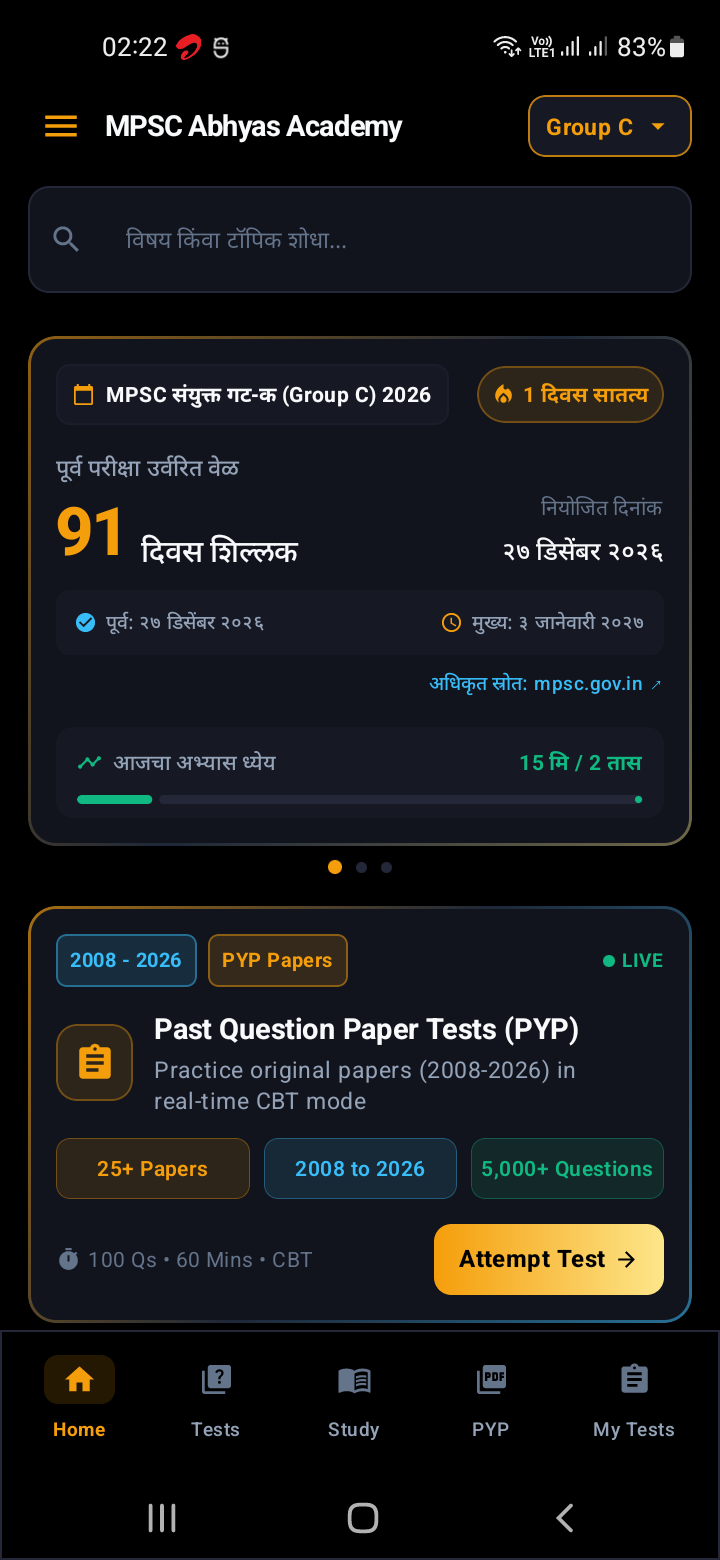
  • खऱ्या परीक्षेसारखा CBT अनुभव: ०.२५ नकारात्मक गुणांकन व अचूक टाइमर
  • विषय, विभाग व घटक टेस्ट्स: सखोल सराव आणि प्रत्येक घटकाचे विश्लेषण
  • सखोल विश्लेषण व अचूकता ट्रॅकर: प्रत्येक प्रश्नाचे सविस्तर उत्तर स्पष्टीकरण व ०.२५ निगेटिव्ह मार्किंग
★★★★★ ४.९ रेटिंग • गुगल प्ले स्टोअरवर उपलब्ध • १००% सुरक्षित व मोफत
MPSC Abhyas Dashboard
MPSC Abhyas Test Series
नवीन: विषय, विभाग व घटक टेस्ट्स