
🎯 सराव प्रश्नपत्रिका (Full Mock Tests) • TOPIC PRACTICE HUB

MPSC संयुक्त पूर्व परीक्षा सराव प्रश्नपत्रिका (Full Mock Tests) (पृष्ठ 94)

MPSC Combine Prelims Full Mock Tests — MPSC Full-Length Mock Test Question Sets

'MPSC संयुक्त पूर्व परीक्षा सराव प्रश्नपत्रिका (Full Mock Tests)' या घटकावरील आयोगाचे मागील वर्षांचे प्रश्न (PYQs) व अद्ययावत संभाव्य प्रश्न सविस्तर मराठी व इंग्रजी स्पष्टीकरणासह सोडवा.

अधिकृत सराव प्रश्न 21,017 MCQs
विषय विभाग फुल मॉक टेस्ट्स
पृष्ठ क्रमांक 94 / 1051
🎯 MPSC संयुक्त गट-ब (PSI/STI/ASO) 🎯 MPSC संयुक्त गट-क (तलाठी समाविष्ट)

🗂️ उपघटक निवडा (Subtopics in MPSC संयुक्त पूर्व परीक्षा सराव प्रश्नपत्रिका (Full Mock Tests))

41 उपघटक
MPSC संयुक्त गट-ब मुख्य परीक्षा Paper 1 सराव चाचणी क्रमांक १
MPSC Combine Group B Mains Paper 1 Practice Test 1
100 प्रश्न
MPSC संयुक्त गट-ब मुख्य परीक्षा Paper 1 सराव चाचणी क्रमांक २
MPSC Combine Group B Mains Paper 1 Practice Test 2
100 प्रश्न
MPSC संयुक्त गट-ब मुख्य परीक्षा Paper 1 सराव चाचणी क्रमांक ३
MPSC Combine Group B Mains Paper 1 Practice Test 3
100 प्रश्न
MPSC संयुक्त गट-ब मुख्य परीक्षा Paper 1 सराव चाचणी क्रमांक ४
MPSC Combine Group B Mains Paper 1 Practice Test 4
100 प्रश्न
MPSC संयुक्त गट-ब मुख्य परीक्षा Paper 1 सराव चाचणी क्रमांक ५
MPSC Combine Group B Mains Paper 1 Practice Test 5
100 प्रश्न
MPSC संयुक्त गट-ब मुख्य परीक्षा Paper 2 सराव चाचणी क्रमांक १
MPSC Combine Group B Mains Paper 2 Practice Test 1
100 प्रश्न
MPSC संयुक्त गट-ब मुख्य परीक्षा Paper 2 सराव चाचणी क्रमांक २
MPSC Combine Group B Mains Paper 2 Practice Test 2
100 प्रश्न
MPSC संयुक्त गट-ब मुख्य परीक्षा Paper 2 सराव चाचणी क्रमांक ३
MPSC Combine Group B Mains Paper 2 Practice Test 3
99 प्रश्न
MPSC संयुक्त गट-ब मुख्य परीक्षा Paper 2 सराव चाचणी क्रमांक ४
MPSC Combine Group B Mains Paper 2 Practice Test 4
100 प्रश्न
MPSC संयुक्त गट-ब मुख्य परीक्षा Paper 2 सराव चाचणी क्रमांक ५
MPSC Combine Group B Mains Paper 2 Practice Test 5
100 प्रश्न
MPSC संयुक्त गट-ब व गट-क मुख्य परीक्षा सराव चाचणी क्रमांक १
MPSC Combine Group B & C Mains Practice Test 1
100 प्रश्न
MPSC संयुक्त गट-ब व गट-क मुख्य परीक्षा सराव चाचणी क्रमांक २
MPSC Combine Group B & C Mains Practice Test 2
100 प्रश्न
MPSC संयुक्त गट-ब व गट-क मुख्य परीक्षा सराव चाचणी क्रमांक ३
MPSC Combine Group B & C Mains Practice Test 3
100 प्रश्न
MPSC संयुक्त गट-ब व गट-क मुख्य परीक्षा सराव चाचणी क्रमांक ४
MPSC Combine Group B & C Mains Practice Test 4
100 प्रश्न
MPSC संयुक्त गट-ब व गट-क मुख्य परीक्षा सराव चाचणी क्रमांक ५
MPSC Combine Group B & C Mains Practice Test 5
100 प्रश्न
MPSC संयुक्त गट-ब व गट-क मुख्य परीक्षा सराव चाचणी क्रमांक ६
MPSC Combine Group B & C Mains Practice Test 6
100 प्रश्न
MPSC संयुक्त गट-ब व गट-क मुख्य परीक्षा Paper 1 सराव चाचणी १
MPSC Combine Group B & C Mains Paper 1 Practice Test 1
100 प्रश्न
MPSC संयुक्त गट-ब व गट-क मुख्य परीक्षा Paper 1 सराव चाचणी २
MPSC Combine Group B & C Mains Paper 1 Practice Test 2
100 प्रश्न
MPSC संयुक्त गट-ब व गट-क मुख्य परीक्षा Paper 1 सराव चाचणी ३
MPSC Combine Group B & C Mains Paper 1 Practice Test 3
100 प्रश्न
MPSC संयुक्त गट-ब व गट-क मुख्य परीक्षा Paper 1 सराव चाचणी ४
MPSC Combine Group B & C Mains Paper 1 Practice Test 4
99 प्रश्न
MPSC संयुक्त गट-ब व गट-क मुख्य परीक्षा Paper 1 सराव चाचणी ५
MPSC Combine Group B & C Mains Paper 1 Practice Test 5
100 प्रश्न
MPSC संयुक्त गट-क सराव चाचणी क्रमांक १
MPSC Combine Group C Practice Test - 1
100 प्रश्न
MPSC संयुक्त गट-क सराव चाचणी क्रमांक २
MPSC Combine Group C Practice Test - 2
100 प्रश्न
MPSC संयुक्त गट-क सराव चाचणी क्रमांक ३
MPSC Combine Group C Practice Test - 3
100 प्रश्न
MPSC संयुक्त गट-क सराव चाचणी क्रमांक ४
MPSC Combine Group C Practice Test - 4
100 प्रश्न
MPSC संयुक्त गट-क सराव चाचणी क्रमांक ५
MPSC Combine Group C Practice Test - 5
100 प्रश्न
MPSC संयुक्त गट-क सराव चाचणी क्रमांक ६
MPSC Combine Group C Practice Test - 6
100 प्रश्न
MPSC संयुक्त गट-क सराव चाचणी क्रमांक ७
MPSC Combine Group C Practice Test - 7
100 प्रश्न
MPSC संयुक्त गट-क सराव चाचणी क्रमांक ८
MPSC Combine Group C Practice Test - 8
100 प्रश्न
MPSC संयुक्त गट-क सराव चाचणी क्रमांक ९
MPSC Combine Group C Practice Test - 9
100 प्रश्न
MPSC संयुक्त गट-क सराव चाचणी क्रमांक १०
MPSC Combine Group C Practice Test - 10
100 प्रश्न
MPSC संयुक्त गट-क सराव चाचणी क्रमांक ११
MPSC Combine Group C Practice Test - 11
100 प्रश्न
MPSC संयुक्त गट-क सराव चाचणी क्रमांक १२
MPSC Combine Group C Practice Test - 12
88 प्रश्न
MPSC संयुक्त गट-क सराव चाचणी क्रमांक १३
MPSC Combine Group C Practice Test - 13
87 प्रश्न
MPSC संयुक्त गट-क सराव चाचणी क्रमांक १४
MPSC Combine Group C Practice Test - 14
98 प्रश्न
MPSC संयुक्त गट-क सराव चाचणी क्रमांक १५
MPSC Combine Group C Practice Test - 15
94 प्रश्न
MPSC संयुक्त गट-क सराव चाचणी क्रमांक १६
MPSC Combine Group C Practice Test - 16
96 प्रश्न
MPSC संयुक्त गट-क सराव चाचणी क्रमांक १७
MPSC Combine Group C Practice Test - 17
98 प्रश्न
MPSC संयुक्त गट-क सराव चाचणी क्रमांक १८
MPSC Combine Group C Practice Test - 18
95 प्रश्न
MPSC संयुक्त गट-क सराव चाचणी क्रमांक १९
MPSC Combine Group C Practice Test - 19
93 प्रश्न
MPSC संयुक्त गट-क सराव चाचणी क्रमांक २०
MPSC Combine Group C Practice Test - 20
91 प्रश्न

📝 घटकनिहाय सोडवलेले प्रश्न (Canonical Solved MCQs)

प्रश्न 1,861 ते 1,880 (एकूण 21,017)
+1.0 / -0.25
खालील प्रश्नार्थक वाक्यातील दोन रिक्त जागा भरण्यासाठी योग्य पर्याय निवडा:
'Are _______ roses in the garden?'
EN Fill in the two blanks in the following interrogative sentence with the most appropriate determiners:
'Are _______ roses in the garden?'
  • (A) there, much
  • (B) those, much
  • (C) there, any
  • (D) this, any
अचूक उत्तर: पर्याय (C) there, any

Introductory 'There' आणि Determiners चे नियम: * अस्तित्वाची विचारणा करण्यासाठी प्रश्नार्थक वाक्यात Introductory 'There' ची रचना वापरली जाते (`Are there...?`). * 'Roses' हे अनेकवचनी गणनीय नाम (Plural Countable Noun) आहे. * 'Much' हे केवळ अगणनीय...

+1.0 / -0.25
खालील वाक्याचे 'Positive Degree' (प्रथमावस्था) मध्ये योग्य रूपांतर असलेला पर्याय निवडा:
'She is the best girl in the school.'
EN Choose the correct transformation of the following sentence into the 'Positive Degree':
'She is the best girl in the school.'
  • (A) No other girl in the school is as good as she is.
  • (B) She is the only good girl in the school.
  • (C) In the school only she is the good girl.
  • (D) She is a good girl only in the school.
अचूक उत्तर: पर्याय (A) No other girl in the school is as good as she is.

Superlative चे Positive Degree मध्ये रूपांतर करण्याचे नियम: * जेव्हा वाक्यात 'the + superlative adjective' (the best) असते, तेव्हा इतर सर्व घटकांपेक्षा श्रेष्ठत्व दर्शवले जाते. * याचे Positive Degree करताना वाक्याची सुरुवात 'No other + एकवचनी नाम'...

+1.0 / -0.25
'I have often seen **falling** stars.' या वाक्यातील 'falling' या शब्दाचे व्याकरणविषयक अचूक कार्य (Grammatical Category) ओळखा:
EN Identify the precise grammatical category and function of the word **'falling'** in the following sentence:
'I have often seen **falling** stars.'
  • (A) Present Participle (वर्तमान कृदंत - विशेषण रूप)
  • (B) Past Participle (भूत कृदंत)
  • (C) Gerund (धातुसाधित नाम)
  • (D) Adverb (क्रियाविशेषण)
अचूक उत्तर: पर्याय (A) Present Participle (वर्तमान कृदंत - विशेषण रूप)

Present Participle (वर्तमान कृदंत) ची व्याख्या व कार्य: * क्रियापदाच्या मूळ रूपाला '-ing' प्रत्यय लागून जेव्हा ते वाक्यात विशेषणाचे (Adjective) कार्य करते (नाम स्पष्ट करते), तेव्हा त्याला Present Participle (किंवा Participial Adjective) म्हणतात. *...

+1.0 / -0.25
'Shall I buy a scooter?' या वाक्यात 'Shall' या Modal Auxiliary चा वापर खालीलपैकी कोणत्या हेतूसाठी करण्यात आला आहे?
EN In the interrogative sentence 'Shall I buy a scooter?', the modal auxiliary verb **'Shall'** is used to express:
  • (A) धमकी किंवा सक्ती (Threat or Compulsion)
  • (B) दृढ निश्चय (Determination)
  • (C) सल्ला किंवा विचारणा / ऑफर (Offer / Seeking advice or permission)
  • (D) भविष्यकालीन अनिवार्यता (Futurity with obligation)
अचूक उत्तर: पर्याय (C) सल्ला किंवा विचारणा / ऑफर (Offer / Seeking advice or permission)

प्रथमपुरुषी 'Shall I / Shall we' चे कार्य: * जेव्हा प्रश्नार्थक वाक्यात प्रथमपुरुषी कर्त्यासोबत (I किंवा We) 'Shall' चा वापर होतो, तेव्हा त्याचा अर्थ साधा भविष्यकाळ न राहता दुसऱ्याची इच्छा विचारणे, सल्ला मागणे (Seeking advice/opinion) किंवा स्वतःहून...

+1.0 / -0.25
'He writes quite well.' या वाक्यातील 'quite' हे क्रियाविशेषण (Adverb) कोणत्या प्रकारातील आहे?
EN Identify the sub-type of the adverb **'quite'** used in the sentence: 'He writes quite well.'
  • (A) Adverb of Manner (रीतीवाचक क्रियाविशेषण)
  • (B) Adverb of Frequency (वारंवारतावाचक क्रियाविशेषण)
  • (C) Adverb of Degree / Quantity (परिमाणवाचक / प्रमाणवाचक क्रियाविशेषण)
  • (D) Adverb of Time (कालवाचक क्रियाविशेषण)
अचूक उत्तर: पर्याय (C) Adverb of Degree / Quantity (परिमाणवाचक / प्रमाणवाचक क्रियाविशेषण)

Adverb of Degree (परिमाणवाचक क्रियाविशेषण): * जे क्रियाविशेषण एखाद्या कृतीची, गुणधर्माची किंवा दुसऱ्या क्रियाविशेषणाची तीव्रता, प्रमाण किंवा मर्यादा (How much? / To what extent?) दर्शवते, त्याला Adverb of Degree म्हणतात. * उदा. quite, very, almost...

+1.0 / -0.25
व्याकरणदृष्ट्या खालील वाक्यांपैकी अशुद्ध (चुकीचे) वाक्य/वाक्ये कोणते ते ओळखा:
(a) I will dine with you in next Friday.
(b) The train arrived at the station in time.
EN From the grammatical perspective, identify the INCORRECT sentence(s) among the following options:
(a) I will dine with you in next Friday.
(b) The train arrived at the station in time.
  • (A) केवळ (a) अशुद्ध आहे (Only (a) is incorrect)
  • (B) केवळ (b) अशुद्ध आहे (Only (b) is incorrect)
  • (C) (a) आणि (b) दोन्ही अशुद्ध आहेत (Both (a) and (b) are incorrect)
  • (D) (a) आणि (b) दोन्ही शुद्ध आहेत (Both (a) and (b) are correct)
अचूक उत्तर: पर्याय (A) केवळ (a) अशुद्ध आहे (Only (a) is incorrect)

शब्दयोगी अव्ययांचा (Prepositions) काळाशी नियम: * जेव्हा दिवसांच्या किंवा काळाच्या नामांमागे 'next', 'last', 'this', 'every' हे शब्द येतात, तेव्हा त्यांच्या आधी 'in', 'on', 'at' यांपैकी कोणतेही शब्दयोगी अव्यय (Preposition) वापरले जात नाही. * उदा...

+1.0 / -0.25
वाक्यातील क्रियेची दिशा दर्शवण्यासाठी योग्य शब्दयोगी अव्यय (Preposition) निवडा:
'The thieves jumped _______ the window.'
EN Select the most appropriate preposition to complete the sentence logically and grammatically:
'The thieves jumped _______ the window.'
  • (A) over
  • (B) between
  • (C) through
  • (D) across
अचूक उत्तर: पर्याय (C) through

'Through' चा शब्दयोगी अव्यय म्हणून वापर: * जेव्हा एखादी व्यक्ती किंवा वस्तू एखाद्या त्रिमितीय बंदिस्त जागेतून, आरपार किंवा एका बाजूकडून दुसऱ्या बाजूकडे पोकळीतून बाहेर पडते (from one side to the other inside a passage or opening), तेव्हा 'through' हे...

+1.0 / -0.25
समान उच्चार परंतु भिन्न अर्थ व स्पेलिंग (Homophones) लक्षात घेऊन योग्य शब्दाची निवड करा:
'The _______ is the spiritual and immortal part of a human being.'
EN Select the correct homophone to meaningfully and orthographically complete the sentence:
'The _______ is the spiritual and immortal part of a human being.'
  • (A) sole
  • (B) soul
  • (C) sol
  • (D) soal
अचूक उत्तर: पर्याय (B) soul

शब्दांच्या अर्थाचे स्पष्टीकरण (Homophones): * Soul (noun): मानवी आत्मा, अंतरात्मा किंवा चेतना (The spiritual or immaterial part of a human being, regarded as immortal). * Sole (noun/adjective): पायाचा तळवा किंवा पादत्राणाचा तळ (the underside of the...

+1.0 / -0.25
शर्तीदर्शक अव्यय 'Unless' चा नियम लक्षात घेऊन रिकाम्या जागी योग्य पर्याय भरा:
'Unless you _______, you will fail.'
EN Applying the syntactic and conditional rules of 'Unless', choose the correct option to fill in the blank:
'Unless you _______, you will fail.'
  • (A) work hard
  • (B) do not work hard
  • (C) will not work hard
  • (D) will work hard
अचूक उत्तर: पर्याय (A) work hard

'Unless' चा व्याकरणविषयक नियम: * 'Unless' चा अर्थच मुळात 'If... not' (जर... नाही तर) असा होतो. त्यामुळे 'Unless' ने सुरू होणाऱ्या उपवाक्यात पुन्हा 'not' किंवा इतर कोणताही नकारात्मक शब्द वापरणे व्याकरणदृष्ट्या अशुद्ध (Double Negative) ठरते. * तसेच...

+1.0 / -0.25
'He walks as if he were lame.' या वाक्यातील 'Compound Conjunction' (संयुक्त उभयान्वयी अव्यय) कोणते ते ओळखा:
EN Identify the 'Compound Conjunction' used in the sentence: 'He walks as if he were lame.'
  • (A) as
  • (B) as if
  • (C) if
  • (D) were
अचूक उत्तर: पर्याय (B) as if

Compound Conjunctions (संयुक्त उभयान्वयी अव्यये): * जेव्हा दोन किंवा अधिक शब्दांचा समूह एकत्र येऊन एका उभयान्वयी अव्ययाचे (Conjunction) कार्य करतो, तेव्हा त्याला Compound Conjunction असे म्हटले जाते. * उदाहरणे: as if, as though, in order that, so...

+1.0 / -0.25
कर्ता-क्रियापद समन्वय (Subject-Verb Agreement) नुसार खालील वाक्याचे शुद्ध रूप असणारा पर्याय ओळखा:
'Ram as well as Sham were present.'
EN Identify the grammatically correct version of the sentence in accordance with Subject-Verb Agreement:
'Ram as well as Sham were present.'
  • (A) Ram as well as Sham are present.
  • (B) Ram as well as Sham was present.
  • (C) Ram as well as Sham have been present.
  • (D) Ram as well as Sham were being present.
अचूक उत्तर: पर्याय (B) Ram as well as Sham was present.

'as well as' चा समन्वय नियम: * जेव्हा दोन नामे किंवा सर्वनामे 'as well as' ने जोडली जातात, तेव्हा वाक्यातील क्रियापद नेहमी पहिल्या नामाच्या (First Subject) वचन व पुरुषानुसार येते. * येथे पहिला कर्ता 'Ram' हा एकवचनी (Singular) आहे. * त्यामुळे...

+1.0 / -0.25
वाक्याचा अर्थ व संयुक्त वाक्याची रचना पूर्ण करण्यासाठी योग्य पर्याय निवडा:
'He must apologize, _______.'
EN Choose the correct alternative to complete the compound sentence meaningfully:
'He must apologize, _______.'
  • (A) and he will be rewarded
  • (B) but he was punished
  • (C) or he will be punished
  • (D) so he is punished
अचूक उत्तर: पर्याय (C) or he will be punished

+1.0 / -0.25
खालीलपैकी कोणते केवलप्रयोगी अव्यय (Interjection) दुःख किंवा खेद (Sorrow / Grief) व्यक्त करण्यासाठी वापरले जाते?
EN Which one of the following interjections is traditionally used to express sorrow or grief?
  • (A) Hello!
  • (B) Alas!
  • (C) Hurrah!
  • (D) Bravo!
अचूक उत्तर: पर्याय (B) Alas!

केवलप्रयोगी अव्ययांचे (Interjections) भावनिक वर्गीकरण: * Alas! : दुःख, खेद, निराशा किंवा शोक (Sorrow, grief, regret) व्यक्त करण्यासाठी वापरले जाते (उदा. *Alas! He is no more.*) * Hello! : अभिवादन किंवा लक्ष वेधून घेण्यासाठी (Greeting / Attention). *...

+1.0 / -0.25
दोन विधानामधील विरोध (Contrast) लक्षात घेऊन योग्य उभयान्वयी अव्यय निवडा:
'She bought a car, _______ she was too young to learn to drive.'
EN Choose the most appropriate conjunction indicating concession/contrast to complete the sentence:
'She bought a car, _______ she was too young to learn to drive.'
  • (A) If
  • (B) Because
  • (C) Although
  • (D) Since
अचूक उत्तर: पर्याय (C) Although

Concessive Conjunction (विरोधदर्शक / सवलतदर्शक उभयान्वयी अव्यय): * जेव्हा दोन वाक्यांमध्ये परस्परविरोधी किंवा अनपेक्षित कल्पना मांडलेल्या असतात (Contrast/Concession), तेव्हा 'Although' / 'Though' हे गौण उभयान्वयी अव्यय वापरले जाते. * वाक्यात: तिने...

+1.0 / -0.25
खालील वाक्याचा वाक्यरचना प्रकार (Sentence Type) अचूक ओळखा:
'They tried their best but could not save him.'
EN Identify the sentence type of the following construction:
'They tried their best but could not save him.'
  • (A) Simple Sentence (केवळ वाक्य)
  • (B) Compound Sentence (संयुक्त वाक्य)
  • (C) Complex Sentence (मिश्र वाक्य)
  • (D) Compound-Complex Sentence (संयुक्त-मिश्र वाक्य)
अचूक उत्तर: पर्याय (B) Compound Sentence (संयुक्त वाक्य)

संयुक्त वाक्याची (Compound Sentence) वैशिष्ट्ये: * जेव्हा दोन स्वतंत्र मुख्य उपवाक्ये (Independent / Coordinate Clauses) एखाद्या Coordinating Conjunction (प्रधानत्वसूचक उभयान्वयी अव्यय - FANBOYS: For, And, Nor, But, Or, Yet, So) ने जोडलेली असतात...

+1.0 / -0.25
आधुनिक इंग्रजी व्याकरणातील 'Preposition Stranding' च्या नियमानुसार, Nominal Wh-clauses, Passives आणि Infinitive उपवाक्यांमध्ये शब्दयोगी अव्यय (Preposition) सामान्यतः कोणत्या स्थानी येते?
EN In modern English syntax, according to the rule of 'Preposition Stranding', where does the preposition conventionally occur in nominal Wh-clauses, passive structures, and infinitive clauses?
  • (A) उपवाक्याच्या शेवटी (at the end)
  • (B) उपवाक्याच्या मध्यभागी (in the middle)
  • (C) पूरक शब्दाच्या आधी (before complement)
  • (D) उपवाक्याच्या सुरुवातीला (at the beginning)
अचूक उत्तर: पर्याय (A) उपवाक्याच्या शेवटी (at the end)

'Preposition Stranding' ची संकल्पना: * जेव्हा इंग्रजी वाक्यातील Preposition हे आपल्या कर्मापासून (Object of preposition) विलग होऊन उपवाक्याच्या किंवा वाक्याच्या शेवटी (at the end) येते, तेव्हा त्या व्याकरणीय क्रियेला 'Preposition Stranding' किंवा...

+1.0 / -0.25
खालील दोन केवळ वाक्यांचे (Simple Sentences) एका संयुक्त/मिश्र (Complex Sentence) वाक्यात रूपांतर करणारा योग्य पर्याय निवडा:
'You are quiet. Can you tell me why?'
EN Synthesize the two simple sentences into a single Complex Sentence by selecting the correct option:
'You are quiet. Can you tell me why?'
  • (A) You tell me the reason for being quiet.
  • (B) What is the reason of being quiet?
  • (C) Can you tell me why are you quiet?
  • (D) Why are you quiet, can you tell me?
अचूक उत्तर: पर्याय (C) Can you tell me why are you quiet?

वाक्य संकलन (Synthesis of Sentences into Complex): * मिश्र वाक्य (Complex Sentence) बनवताना एका मुख्य उपवाक्यात (Main Clause) दुसरे गौण उपवाक्य (Subordinate Noun Clause) समाविष्ट केले जाते. * येथे 'Can you tell me' हा मुख्य प्रश्नार्थक भाग असून...

+1.0 / -0.25
'You may wear **whatever you fancy**.' या वाक्यातील ठळक/अधोरेखित उपवाक्य (Subordinate Clause) कोणत्या प्रकारातील आहे?
EN Identify the grammatical type of the subordinate clause highlighted in the sentence:
'You may wear **whatever you fancy**.'
  • (A) Adjective Clause (विशेषण उपवाक्य)
  • (B) Adverb Clause (क्रियाविशेषण उपवाक्य)
  • (C) Noun Clause (नाम उपवाक्य)
  • (D) Coordinate Clause (समान दर्जाचे उपवाक्य)
अचूक उत्तर: पर्याय (C) Noun Clause (नाम उपवाक्य)

Noun Clause (नाम उपवाक्य) ओळखण्याची पद्धत: * जे गौण उपवाक्य मुख्य वाक्यात एखाद्या नामासारखे कार्य करते (म्हणजेच क्रियापदाचा कर्ता, क्रियापदाचे कर्म किंवा शब्दयोगी अव्ययाचे कर्म बनते), त्याला Noun Clause म्हणतात. * मुख्य क्रियापदाला 'What?' (काय?)...

+1.0 / -0.25
'She did not attend the meeting **because she was unwell**.' या वाक्यातील अधोरेखित उपवाक्य कोणत्या प्रकारचे क्रियाविशेषण उपवाक्य (Adverb Clause) आहे?
EN In the sentence 'She did not attend the meeting **because she was unwell**', what specific sub-type of Adverb Clause is the highlighted clause?
  • (A) Adverb Clause of Time (कालदर्शक क्रियाविशेषण उपवाक्य)
  • (B) Adverb Clause of Condition (शर्तदर्शक क्रियाविशेषण उपवाक्य)
  • (C) Adverb Clause of Reason / Cause (कारणदर्शक क्रियाविशेषण उपवाक्य)
  • (D) Adverb Clause of Result (परिणामदर्शक क्रियाविशेषण उपवाक्य)
अचूक उत्तर: पर्याय (C) Adverb Clause of Reason / Cause (कारणदर्शक क्रियाविशेषण उपवाक्य)

Adverb Clause of Reason (कारणदर्शक क्रियाविशेषण उपवाक्य): * जे गौण उपवाक्य मुख्य वाक्यातील क्रिया घडण्याचे कारण (Reason / Cause) स्पष्ट करते, त्याला Adverb Clause of Reason म्हणतात. * हे उपवाक्य सामान्यतः 'because', 'as', 'since', 'for' या गौण...

+1.0 / -0.25
खालील विधानाचा योग्य अप्रत्यक्ष कथन (Indirect Speech) पर्याय निवडा:
'He said to me, "Where are you going?"'
EN Choose the correct Indirect Speech transformation for the following direct sentence:
'He said to me, "Where are you going?"'
  • (A) He asked me where I was going.
  • (B) He asked me where was I going.
  • (C) He told me that where I was going.
  • (D) He asked me whether I was going.
अचूक उत्तर: पर्याय (A) He asked me where I was going.

Wh-प्रश्नार्थक वाक्याचे Indirect Speech करण्याचे नियम: 1. Reporting Verb: प्रश्न असल्याने 'said to' चे 'asked' किंवा 'inquired of' होते. 2. Conjunction: Wh-प्रश्नात 'that', 'if' किंवा 'whether' वापरत नाहीत; मूळ Wh-शब्दच (Where) कनेक्टिव्ह म्हणून...

🎯 या घटकाशी संबंधित सराव टेस्ट सिरीज

सर्व टेस्ट सिरीज →
अधिकृत मोबाईल ॲप • OFFICIAL ANDROID APP

MPSC Abhyas ॲपसह सुरू करा सर्वोत्तम तयारी

Start Your Preparation with MPSC Abhyas Mobile App

महाराष्ट्र लोकसेवा आयोग (MPSC) राज्यसेवा, गट-ब व गट-क परीक्षांसाठी ५०,०००+ सराव प्रश्न, मागील वर्षांच्या मूळ प्रश्नपत्रिका (PYQs), सविस्तर स्पष्टीकरणे आणि राज्यस्तरीय रँकिंग — आता आपल्या मोबाईलमध्ये!
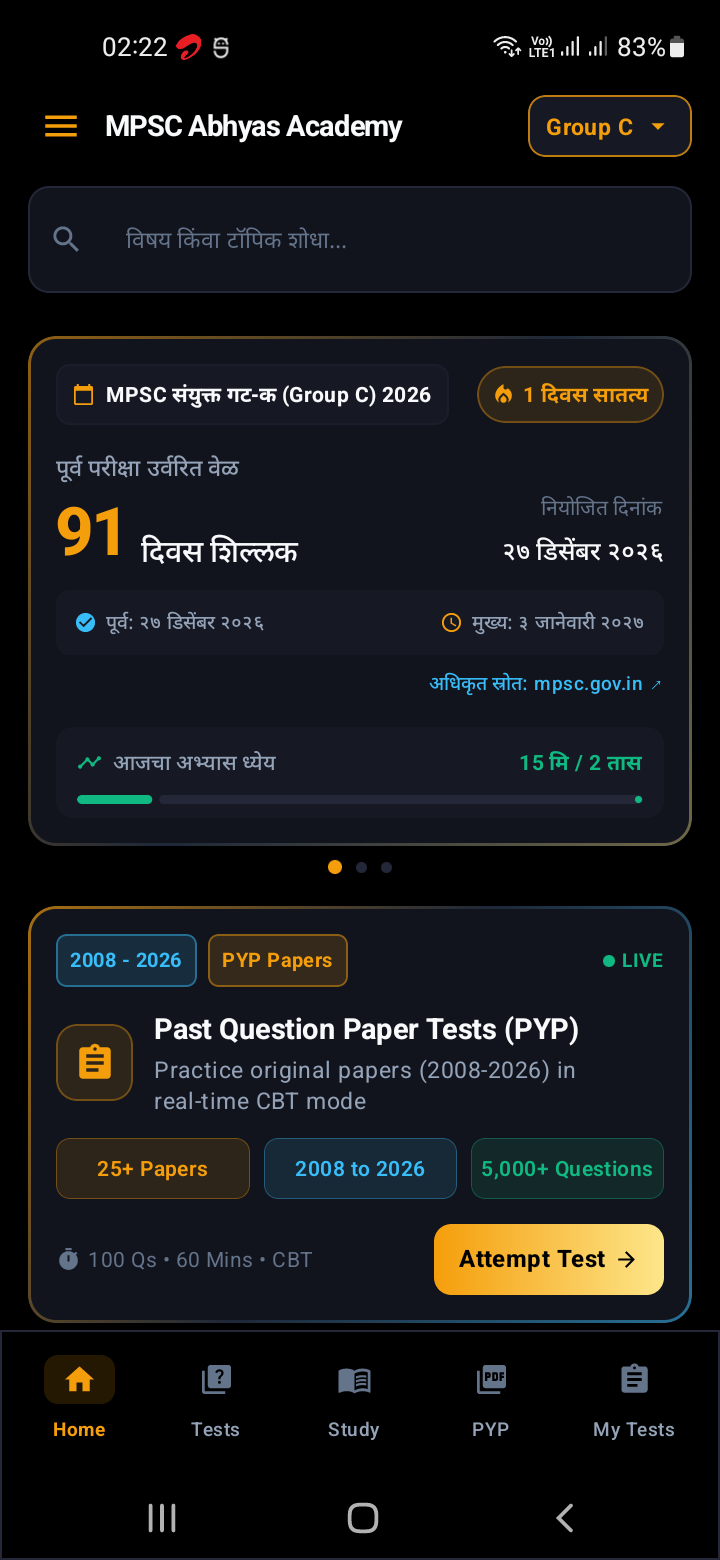
  • खऱ्या परीक्षेसारखा CBT अनुभव: ०.२५ नकारात्मक गुणांकन व अचूक टाइमर
  • विषय, विभाग व घटक टेस्ट्स: सखोल सराव आणि प्रत्येक घटकाचे विश्लेषण
  • सखोल विश्लेषण व अचूकता ट्रॅकर: प्रत्येक प्रश्नाचे सविस्तर उत्तर स्पष्टीकरण व ०.२५ निगेटिव्ह मार्किंग
★★★★★ ४.९ रेटिंग • गुगल प्ले स्टोअरवर उपलब्ध • १००% सुरक्षित व मोफत
MPSC Abhyas Dashboard
MPSC Abhyas Test Series
नवीन: विषय, विभाग व घटक टेस्ट्स